Robert answered a call three weeks after his wife’s funeral from someone demanding payment on a card he had never used. He was tempted to hand over bank information simply to stop the calls, but grief, rent, and groceries were already competing for his attention. Before he paid, he needed to know whether being the surviving spouse made the debt his responsibility.

A bill addressed to your spouse, a call directed at you, and a debt you legally owe are three different things. Sorting them out starts with the account agreement, the assets your spouse left behind, and the law that applies to your marriage and estate. You do not need to resolve every account during one upsetting phone call. You do need to protect deadlines, essential payments, and your own information.
The Debt Survival Guide is led by Jim Prather, a retired CPA with 45 years of experience. Articles are created with AI assistance through a structured research and writing process. Jim provides editorial direction and performs a high-level structural review, but he does not personally write or line-edit every article. Important legal details should be verified through the cited official sources or a qualified professional.
Quick Answer
Short answer: Usually, you do not become personally responsible for a spouse’s debt simply because they died. Debts generally become claims against the deceased person’s estate. You may still owe a debt if you were already a joint borrower or co-signer, or if applicable marital-property or family-expense laws make you responsible. Being only an authorized user on a credit card generally does not create contractual liability for its balance. Also, a mortgage or other lien can remain enforceable against property even when you do not personally owe the loan. Verify the account and local law before paying from your own money.
Table of Contents
Start here: does the debt belong to you or the estate?
Marriage alone does not automatically transfer every unpaid bill to a surviving spouse. Generally, a deceased person’s debts are paid from their estate—the property and financial interests subject to estate administration—not simply from a family member’s personal bank account. The CFPB explains the general rule and its exceptions.
Your responsibility usually turns on three separate questions:
- Were you already obligated? A joint borrower or co-signer may remain liable under the agreement after the other borrower dies.
- Does state law create responsibility? Marital-property rules or laws covering necessary family expenses may affect some debts.
- Can a creditor reach particular property? A valid estate claim or lien may affect an inheritance, home, or vehicle without making you personally responsible for every balance.
If an estate cannot pay all valid debts, unpaid balances generally do not become the family’s personal obligations merely because the estate ran out of money. But existing joint liability, liens, and state-law remedies still need review. Being the executor is also different from being a borrower: administering an estate does not, by itself, make its debts yours.
Important caution
Do not give a caller bank access, sign a new repayment agreement, or pay an unfamiliar balance just because they say a spouse must cover it. Ask for the claim in writing and verify the company through an independent contact number. But do not ignore court papers, probate notices, or payments needed to protect a home or vehicle while you seek advice. Those issues can have real deadlines. If you administer the estate, distributing money or paying creditors in the wrong order can also create problems, even when the underlying debt was not personally yours.
How the estate pays creditors
The executor or court-appointed personal representative gathers estate assets, identifies obligations, follows creditor-notice procedures, and pays valid claims under applicable law. Not every asset passes through probate, and some estates qualify for simplified procedures. A will naming an executor does not necessarily give that person immediate authority to act; court appointment may be required.
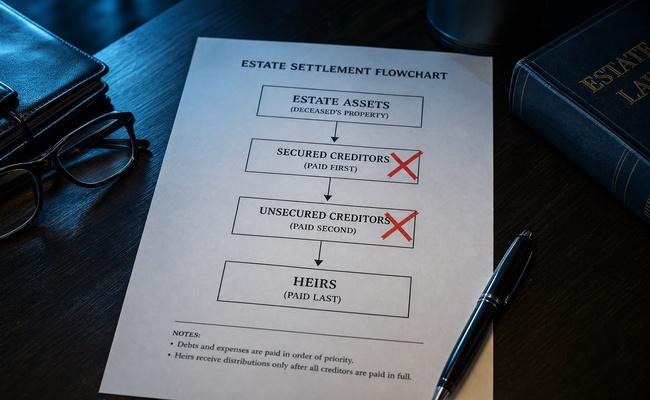
There is no universal rule that all secured debts are paid first, followed by credit cards. State law determines claim priorities, which can include administration expenses, family protections, taxes, funeral expenses, and other categories. Secured creditors also have rights in their collateral that require separate attention.
If debts exceed available estate assets, get advice before choosing which creditors to pay. Paying the loudest collector first or distributing an inheritance too early can violate the required order. An insolvent estate may leave heirs with no distribution, but that is different from heirs inheriting all its unpaid bills.
Check whether you were a borrower, co-signer, or authorized user
A joint borrower or co-signer may be responsible for the unpaid balance, not just half of it, depending on the agreement and applicable law. Who made the purchases is usually less important than who accepted the repayment obligation.

An authorized user on a credit card generally is not contractually responsible for the account balance merely because they had permission to use the card. However, separate marital-property or family-expense rules may still matter. A joint checking account is also not the same thing as a joint credit card or loan.
Ask the creditor to identify your account role and explain the basis for any claim against you. Request relevant account-opening records, statements, or other evidence. Do not assume a collector must produce an original signed agreement in every situation; debt-validation requirements and the evidence needed in court are different questions.
For collectors covered by federal debt-collection law, a written dispute within the 30-day period stated in the validation notice generally requires collection of the disputed debt to pause until verification is provided. The CFPB describes required debt information. Our debt validation letter guide can help you organize a written request; adapt it to the estate and your actual account role.
When state marital-property rules can change the answer
Community-property laws can affect debts incurred during marriage, including debts held in only one spouse’s name. But they do not make every debt a surviving spouse’s personal obligation in every circumstance. States differ on which property creditors can reach, how debts are characterized, and what happens after a spouse dies.
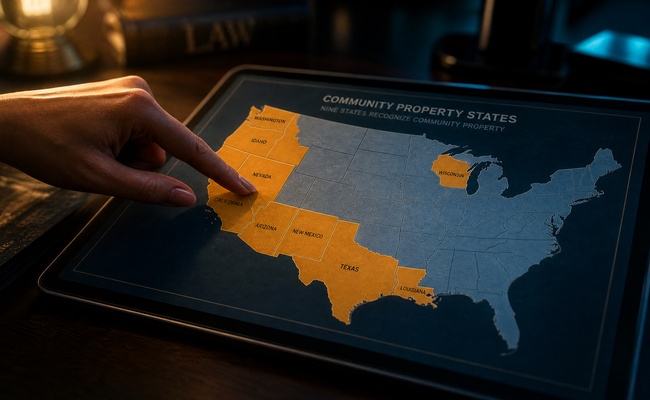
Treat a community-property map as a starting point, not a liability test. Where the spouses lived when a debt arose, when the debt was incurred, what it paid for, ownership arrangements, and later moves may all matter. Do not assume a debt is exempt merely because it predates the marriage or involved spending you did not know about.
Some states also have laws concerning necessary family expenses, sometimes called a doctrine of necessaries, that can affect responsibility for medical bills or other obligations. These rules can matter outside community-property jurisdictions. The FTC’s guidance on debts and deceased relatives identifies these possible exceptions to the general rule.
If a creditor cites either type of law, ask for its explanation in writing and have a local probate or consumer-law attorney review it. “You were married” is not a complete legal analysis.
Keep the facts separate
Personal liability and property exposure are not the same question. You might not owe your spouse’s individual credit card bill, yet that creditor could have a valid claim against estate assets before you inherit them. Likewise, receiving an account through a beneficiary designation may avoid probate without making the money immune from every creditor claim. Community-property rules, spousal medical-expense laws, ownership arrangements, exemptions, and creditor remedies vary. The useful question is not only “Is my name on the bill?” but also “Who borrowed, what property is involved, and which state’s law applies?”
The executor’s job and the deadlines that matter
Formal creditor notification is an estate-administration task. Depending on local law, it may involve publication, direct notice to known creditors, filings, and a process for accepting or challenging claims. Tell the estate representative about any bill or collection notice you receive, even if you believe it is invalid.

There is no single national probate claim deadline. Notice procedures, creditor knowledge, claim type, and state law can change the applicable deadline and its effect. Do not assume that the funeral date starts a universal countdown or that every creditor loses every remedy when one probate deadline expires.
Keep these clocks separate:
- The deadline for a creditor to present an estate claim.
- The deadline for disputing a collector’s validation notice.
- The time to respond to a lawsuit or other court document.
- The ordinary statute of limitations for a debt claim.
Our guide to the statute of limitations on debt explains the ordinary collection deadline, but it is not a substitute for checking probate deadlines. If you receive court papers, get help promptly rather than relying on a letter asking the collector to stop calling.
Beneficiary designations do not guarantee creditor protection
Life insurance, retirement accounts, payable-on-death accounts, and some jointly owned property may pass outside probate when their ownership and beneficiary arrangements are valid. That can simplify transfer, but “outside probate” does not automatically mean “protected from every creditor.”

Protection depends on the asset, account terms, state exemptions, applicable federal law, and the kind of claim involved. Naming an estate as beneficiary can also produce a different result from naming an individual. Joint ownership and survivorship rights should be checked in the actual account or property records, not inferred from how a couple used the asset.
- Confirm the named beneficiary directly with the insurer or account custodian.
- Check the deed or account registration for the exact ownership arrangement.
- Identify existing mortgages, vehicle liens, or other secured claims.
- Ask whether local law allows creditor recovery from a nonprobate transfer.
Before spending or distributing a substantial transfer, ask a qualified professional whether creditor claims or estate obligations could affect it. Receiving property does not automatically make you liable for all the deceased person’s debts, but a recipient may sometimes have to return property or its value under applicable law.
How to handle collection calls without agreeing to pay
A collector may be allowed to discuss a deceased person’s debt with a surviving spouse or estate representative. The fact that someone can contact you does not establish that you personally owe the money.

You can say: “Please send the account information in writing and explain why you believe I am personally responsible. I am not agreeing to pay during this call. If this is an estate claim, I will pass the information to the authorized estate representative.”
Record the date, caller’s name, company, contact information, claimed amount, and what was said. Save letters, voicemails, and envelopes. Verify the company independently before sharing sensitive records, and provide only information reasonably necessary for the legitimate request.
The federal Fair Debt Collection Practices Act generally covers qualifying third-party collectors and many debt buyers, not every original creditor. Covered collectors cannot misrepresent a debt’s legal status or use prohibited threats or harassment. State protections may be broader. Our guide to debt collector harassment explains warning signs worth documenting.
A written stop-contact request can limit further communications from a covered collector, with certain exceptions. It does not erase a valid debt, prevent all legal action, or replace a timely dispute. See the CFPB’s stop-contact guidance and its debt collection resources and complaint options.
A practical checklist for the first calls and letters
You do not have to settle every balance immediately. Your first task is to separate urgent legal or property issues from demands that can be reviewed calmly.
- Protect essentials. Identify housing, utilities, insurance, food, and other necessary expenses. Get advice promptly if a mortgage, vehicle loan, or insurance policy is at risk.
- Locate the estate representative. Confirm who is authorized to act. Being the surviving spouse does not always mean you can administer every account.
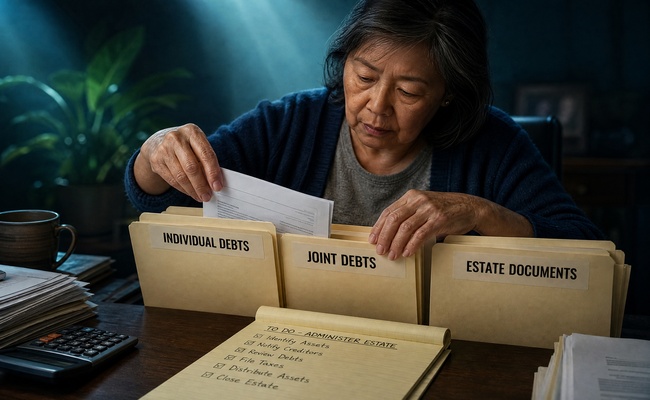
- Build a debt list. Record the creditor, account number, balance, borrower names, collateral, and any deadline. Mark uncertain items rather than guessing.
- Collect supporting records. Gather statements, agreements, property records, beneficiary confirmations, and notices. Keep estate money and your own money separate.
- Notify institutions through verified channels. Ask creditors, insurers, and credit bureaus what documentation and proof of authority they require. A credit report can help identify accounts, but it is not a complete inventory of every debt or proof of liability.
- Stop using the deceased person’s individual credit accounts. Authorized-user access is not permission to keep charging after death. Ask the issuer about lawful arrangements for any account you need to retain.
- Calendar notices and seek targeted help. Prioritize lawsuits, estate claim deadlines, secured property, disputed spousal liability, and an estate that cannot pay its bills.
Before putting a funeral expense or other new bill on your own credit card, understand that your new agreement can create your own debt. That is separate from whether you owed your spouse’s earlier obligations.
Mortgages, car loans, and taxes need separate checks
A lien can remain attached to a home or vehicle after the borrower dies. Even if you are not personally liable for the loan, missed payments can put the collateral at risk. Contact the servicer through a verified number to discuss death documentation, ownership, successor procedures, payment arrangements, and available options before signing a new loan or repayment promise.
For a joint loan you already owe, continue evaluating the payment obligation while the estate is handled. For a loan solely in your spouse’s name, do not assume either that the loan disappears or that refinancing into your name is automatically required. Ownership, loan terms, and applicable protections need review.
Taxes also require a separate analysis. A final income tax return may be needed, the estate may have filing obligations, and a surviving spouse may have exposure from joint tax returns. The IRS explains filing final returns for a deceased person.
If a debt is canceled or a Form 1099-C arrives, do not assume the amount is automatically taxable to you. The debtor, timing, and available exceptions or exclusions matter. The IRS’s canceled-debt guidance is a starting point; a tax professional should determine whose return, if any, is affected.
If the debt is yours, plan around your new household income
Once an obligation is confirmed as yours, ask about hardship assistance, a manageable payment arrangement, or other options before accepting terms. Get proposals in writing and check whether interest, fees, collateral, or credit reporting will be affected.
Build a budget around your current income rather than the income your household had before the death. Our debt repayment budget guide can help you protect essential expenses and identify a payment amount you can realistically sustain.
If you cannot afford your own debts, consider a reputable nonprofit credit counselor or a consumer-law attorney. Bankruptcy may be an option in some circumstances, but its effect on debts, property, and taxes requires individualized review. The IRS bankruptcy FAQ addresses tax issues in bankruptcy; it does not determine whether you inherited responsibility for a spouse’s debt.
The safest sequence is to verify who owes the debt, identify property and deadlines at risk, and then choose a response. A collector’s urgency is not a substitute for that review.
Frequently Asked Questions
Does a parent’s debt transfer to their children after death?
Usually not simply because they are the deceased person’s children. A child may remain responsible for a debt they co-signed or otherwise legally owe. Estate assets may need to pay valid claims before an inheritance is distributed, and an improper distribution may be recoverable under local law. Acting as executor also carries duties, but it does not by itself make a child the borrower on every estate debt.
Can creditors take my inheritance to pay my spouse’s debt?
Valid estate claims generally must be addressed before remaining estate property is distributed. That can reduce or eliminate an inheritance. Assets passing directly through a beneficiary designation or survivorship arrangement require separate review: avoiding probate does not guarantee protection from creditor claims. Existing liens and state-law recovery rules may still apply. Ask about the specific asset before treating it as available to spend.
What if I already paid a debt I did not owe?
Save the payment record and all communications, then ask a local consumer-law or probate attorney whether a refund or other remedy is available. Recovery is not guaranteed. A payment does not universally create liability for someone else’s debt, but signing a new agreement or making a payment on an obligation you already owe can have legal consequences. Report suspected misleading collection practices to the CFPB or your state consumer-protection office.
How long can creditors pursue a deceased spouse’s debt?
There is no single national deadline. Probate claim periods, notice requirements, ordinary statutes of limitation, and rules for secured or other special claims can differ. A missed estate deadline does not necessarily eliminate every remedy against a co-borrower or collateral. Have the estate representative verify applicable deadlines, and respond promptly to court papers even if you believe the claim is too old.
Should I notify creditors of my spouse’s death?
Formal estate creditor notices are generally handled by the authorized representative under local procedures. You can also contact institutions through verified channels to report the death and learn what documents they require. Prompt contact is especially useful for joint accounts, secured loans, and stopping further use of individual credit accounts. Reporting the death or providing documentation is different from agreeing to pay a debt personally.
Are unmarried partners responsible for each other’s debts after death?
Living together alone generally does not make one partner responsible for the other’s debts. Joint borrowing, co-signing, liens on shared property, and account ownership still matter. Registered domestic partnerships or other legally recognized relationships may have additional rules in some jurisdictions. An unmarried partner who inherits property or administers an estate should also check creditor claims and administration duties rather than assuming every asset is protected.
What to Do Next
Start a folder with the death certificate, account statements, loan agreements, beneficiary records, and any collection or court notices. List each debt as potentially yours, potentially estate-only, or uncertain; do not guess based on whose name appears on a statement. Identify the executor or other authorized estate representative, then ask creditors for written information about disputed accounts. Keep a call log and calendar every stated deadline. Get local probate or consumer-law advice promptly if the estate lacks money, a collector claims you personally owe a balance, or a home, vehicle, or lawsuit is involved.
Disclaimer: The Debt Survival Guide provides educational content only. We are not attorneys, tax professionals, or financial advisors. This information should not be considered legal, tax, housing, credit, or individualized financial advice. Circumstances, agreements, deadlines, laws, and available options vary by person, account, location, and situation. Responsibility for a spouse’s debt can turn on the account documents, estate rules, marital-property law, and local procedure. Please review your records and written terms and consult a qualified attorney, legal-aid organization, HUD-approved housing counselor, tax professional, credit counselor, or financial professional before making decisions about your specific situation.
References and Sources
- Consumer Financial Protection Bureau: Does a person’s debt go away when they die?: Official source — Debts generally are paid from the deceased person’s estate; surviving family members are not automatically personally liable, and joint obligations and state-law exceptions require review.
- Federal Trade Commission: Debts and Deceased Relatives: Official source — Estate payment responsibilities, possible co-signer and spousal exceptions, authorized-user distinctions, and permitted collection communications after a death.
- Consumer Financial Protection Bureau: Debt Collection: Official source — Consumer debt-collection protections, practical response resources, and complaint options; the legality of a collection demand depends on the facts and applicable law.
- Consumer Financial Protection Bureau: What information does a debt collector have to give me about a debt?: Official source — Required validation information and the consequences of a timely written dispute; validation is not a universal requirement to provide an original signed contract.
- Consumer Financial Protection Bureau: How do I get a debt collector to stop calling or contacting me?: Official source — Written stop-contact requests, limited exceptions, and the distinction between stopping communications and eliminating a debt or potential legal action.
- Internal Revenue Service: File the final income tax returns of a deceased person: Official source — Final income tax filing considerations after death and the need to determine appropriate filing responsibilities.
- Internal Revenue Service: Topic No. 431, Canceled Debt: Official source — Canceled-debt income can involve exceptions and exclusions; tax treatment should not be inferred solely from receipt of a Form 1099-C.
- Internal Revenue Service: Bankruptcy Frequently Asked Questions: Official source — Tax issues require separate analysis when bankruptcy is considered. This source is used for bankruptcy tax context only, not to establish surviving-spouse or estate liability.