If you are receiving calls, letters, texts or direct messages from a debt collector regarding a debt you do not recognize, cannot afford, or believe to be inaccurate, you have federal rights that protect you. Under the Fair Debt Collection Practices Act (FDCPA), you may have rights under the FDCPA to dispute the debt and request validation information from a covered debt collector. This process begins with a formal written request known as a debt validation letter, and using a clear debt validation letter template can make the process easier. A debt validation letter template can help organize that request, but it does not change the legal standard.
At The Debt Survival Guide, our team leverages over 45 years of CPA expertise to help consumers navigate the complex world of debt collection. We provide educational tools to help consumers understand and use their rights. In this comprehensive guide, we provide a free, copy-paste-ready debt validation letter template and explain exactly how to use it to protect yourself in 2026.
Table of Contents
What is a Debt Validation Letter?
A debt validation letter is a formal written communication sent by a consumer to a debt collection agency, disputing a debt and demanding legal proof of its validity. When a collection agency purchases a debt portfolio from an original creditor (such as a credit card company or hospital), they often receive only basic information—a name, an address, and a balance owed. They may not have every document a consumer expects, and the information needed to evaluate enforceability can depend on the debt, the collector, and applicable law.
By sending the letter from our debt validation letter template, you ask the collector to pause collection activity while they provide adequate verification of the debt. This protection generally applies when you send a timely written dispute during the initial 30-day period, and collection must remain paused until the collector provides the required verification. This right is enshrined in 15 U.S. Code § 1692g of the FDCPA. A failure to validate does not, by itself, automatically require deletion of information from a credit report; inaccurate or incomplete reporting is addressed through separate FCRA dispute and investigation procedures.
Debt Validation vs. Debt Verification
While these terms are often used interchangeably, there is a technical distinction under the law. Debt validation typically refers to the information the collector is required to send you (the validation notice) when they first contact you. Debt verification refers to the proof they must provide when you formally dispute the debt. However, in practical terms, a “debt validation letter” and a “debt verification letter” serve the same purpose: requesting the information needed to evaluate the claim. A well-drafted debt validation letter template works for both situations.
Your Rights Under the FDCPA and Regulation F
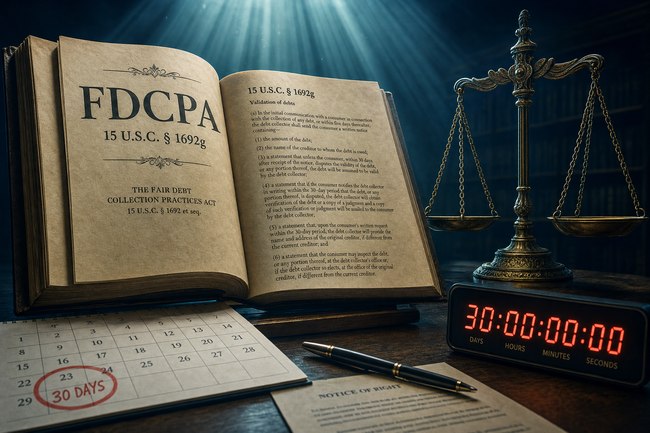
The Fair Debt Collection Practices Act (FDCPA) provides robust protections against abusive, deceptive, and unfair debt collection practices. In late 2021, the Consumer Financial Protection Bureau (CFPB) implemented Regulation F, which updated the FDCPA to account for modern communication methods like email and text messages, and clarified the requirements for validation notices.
The 30-Day Window
A debt collector generally must provide the required validation information in the initial communication, within five days, or orally in the initial communication, subject to the exceptions and delivery rules in Regulation F. This notice must include specific information, such as the amount of the debt, the name of the creditor, and instructions on how to dispute the debt.
Before you send your letter, it helps to know exactly what kind of account you are dealing with. Many people see both a charged-off account and a collection account for the same debt and assume they owe it twice. Our guide to charge off vs collection differences explains who actually owns your debt, how the seven-year reporting clock works, and which entry your validation letter should target. A debt validation letter template also helps you keep the requested information organized.
Crucially, you have 30 days from the receipt of this validation notice to act, so keep a debt validation letter template ready to customize and mail quickly. A debt validation letter template is only a communication aid; the validation notice controls the applicable deadline. If you send your letter within this 30-day window, the collector generally must cease collection of the debt, or disputed portion, until it sends the required verification or a copy of a judgment. Credit-reporting disputes follow separate FCRA procedures.
If you miss the 30-day window, the debt is assumed to be valid by the collector. You can still use a debt validation letter template after 30 days, but the collector is not legally required to pause collection activities while they investigate your dispute.
Validation letters are especially powerful against very old accounts that have been sold and resold between debt buyers, because the paperwork rarely survives the journey. If a collector has contacted you about a debt you thought was paid, expired, or discharged, read our guide on zombie debt: how to handle old debts sold to collection agencies before you respond.
If you’re dealing with aggressive debt collectors, one of your best tools is forcing them to prove they legally own the debt. Learn how to do this effectively by reading our guide on collections on credit report timelines and validation strategies.
What Collectors Must Provide
When a timely written dispute is submitted, the collector must provide the verification required by applicable law before resuming collection; federal law does not prescribe one universal package of documents for every dispute. Consumers may ask the collector to identify or explain:
- The name and address of the original creditor.
- The original account number.
- An itemization of the debt, including the principal balance, interest, and any fees applied.
- Proof that the collection agency has the legal right to collect the debt (such as an assignment or purchase agreement).
If a consumer submits a timely written dispute, the collector generally must stop collecting the debt, or disputed portion, until it sends the required verification or a judgment; the dispute rule does not itself decide whether the debt is enforceable or require credit-report deletion.
How to Use Our Debt Validation Letter Template
Writing this letter from scratch — or adapting a debt validation letter template — does not require a law degree. In fact, keeping the letter simple, direct, and professional is the most effective approach. You should clearly state that you are disputing the debt and requesting validation under the FDCPA.
Here are the key elements every effective debt validation letter template must include:
- Your Information: Your full name and current mailing address.
- Collector’s Information: The name and address of the collection agency.
- Account Details: The account number referenced in their communication.
- The Dispute Statement: A clear statement that you are disputing the debt.
- The Demand for Validation: A specific request for proof of the debt, including the original creditor’s information and an itemization of the balance.
- Communication Preferences: A demand that they cease phone calls and communicate only in writing.
Do not admit to owing the debt, do not offer a payment plan, and do not sign the letter (a typed name is sufficient and prevents your signature from being copied). If your goal is to end the phone calls entirely, see our guide on how to stop debt collectors from calling you.
Free Debt Validation Letter Template
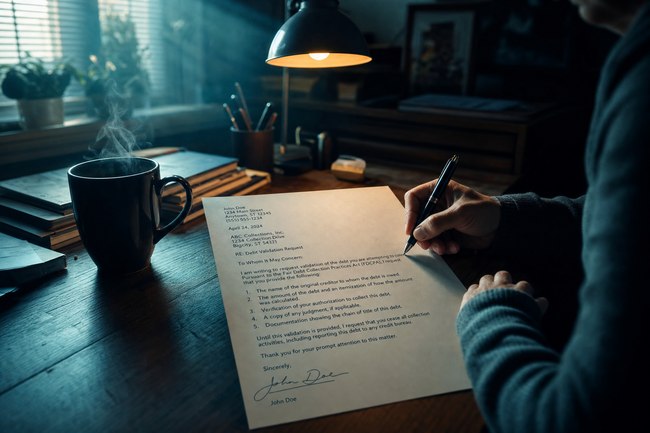
Below is a complete, professional debt validation letter template. You can copy and paste this debt validation letter template text, fill in the bracketed information, and mail it to the collection agency.
[Your Name]
[Your Address]
[Your City, State, Zip Code][Date]
[Name of Collection Agency]
[Address of Collection Agency]
[City, State, Zip Code]Re: Account Number [Insert Account Number]
To Whom It May Concern:
I am writing in response to your recent communication regarding the above-referenced account. I am formally disputing this debt and requesting validation pursuant to my rights under the Fair Debt Collection Practices Act (FDCPA), 15 U.S.C. § 1692g.
Please be advised that this is not a refusal to pay, but a notice that your claim is disputed and validation is requested.
To help me evaluate the account, please provide the following information to the extent required or available under applicable law:
- The name and address of the original creditor to whom the debt was owed.
- The original account number associated with the debt.
- An itemized accounting of the alleged debt, including the principal balance, interest, and any fees or penalties assessed.
- If licensing applies under my state law, please provide the name of the licensing authority and any available license information.
- Information showing the basis on which your agency claims authority to collect, if required or available under applicable law.
Furthermore, I request that you cease all telephone communication with me regarding this matter. All future communications must be made in writing and sent to the address provided above.
If you cannot provide the requested validation, please cease collection activity as required while the timely written dispute remains unresolved. Any credit-reporting issue should be addressed through the separate dispute and investigation procedures available under the Fair Credit Reporting Act.
Sincerely,
[Type Your Name—Do Not Sign]
(Note: We have also created a beautifully formatted PDF version of this debt validation letter template. Download the PDF template here.)
Having trouble opening the form? Download the free Adobe Reader to fill in and print this letter.
What to Do After Sending the Letter
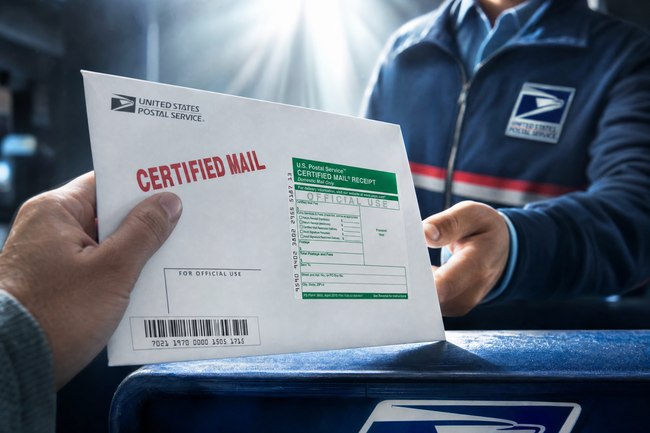
Mailing our debt validation letter template is only the first step — what you do after sending the debt validation letter template determines whether your rights stay protected. Follow these best practices when dealing with debt collectors.
1. Send via Certified Mail
Many consumers choose USPS Certified Mail with a Return Receipt Requested to document mailing and delivery. That method can create useful evidence, but it is not the only possible way to submit a dispute and does not decide the merits of the claim.
This provides evidence of mailing, delivery, and the date shown by the receipt for your records; it does not by itself determine every legal issue or prove every fact about the dispute. Keep the green return receipt card and a copy of the letter for your records. This documentation can help establish when the collector received your dispute if you need to evaluate whether they followed the FDCPA’s requirements. Keep the debt validation letter template with the receipt and mailing records.
2. Monitor Your Credit Reports
After receiving a timely written dispute, a furnisher that reports the account generally must report that the account is disputed, subject to the applicable FCRA and furnishing requirements. Check your credit reports regularly (you can access them for free at AnnualCreditReport.com) to review how the account is reported. If the furnisher fails to note a properly submitted dispute or reports information that is inaccurate or incomplete, you may have grounds to use the FCRA dispute and investigation process.
3. Review the Collector’s Response
The collector has a few options upon receiving your letter:
- They validate the debt: They send verification of the debt or a copy of a judgment, after which you can evaluate your options under the agreement and applicable law. Receiving verification does not by itself establish every contested fact or resolve every issue concerning collection authority. At this point, you can set up a payment plan, explore other options, or follow our step-by-step guide on how to negotiate a debt settlement. Once a collector validates the debt and you decide to pay, protect your credit score first. Send a pay for delete letter before any money changes hands — it requests that the collection agency consider removing the account from the credit bureaus as a condition of payment, but removal is not guaranteed, and our free template makes it a fifteen-minute task.
- They stop collecting: They realize they do not have the necessary documentation, so they close the account and stop contacting you. They may sell the debt to another agency, in which case you will need to send a new validation letter to the new agency.
- They ignore you: If they fail to validate the debt but continue attempting to collect it, that may warrant reviewing the facts under the FDCPA and applicable state law. You can file a complaint with the CFPB or consult a consumer protection attorney.
Frequently Asked Questions (FAQ)
How long does a debt collector have to respond to a validation letter? Under the FDCPA, there is no specific time limit for a debt collector to respond to the letter you send from a debt validation letter template. If you sent a written dispute within the validation period, the collector generally must cease collection of the debt, or disputed portion, until it sends the required verification or a copy of a judgment. If the collector does not respond, a consumer may need to evaluate the available dispute, regulatory, or legal options; the absence of a response does not by itself require deletion of a credit-report entry or resolve every legal issue.
Can I send a validation letter after 30 days? Yes, you can use a debt validation letter template at any time. A debt validation letter template can still help you state the dispute clearly after that period. However, if you send it after the initial 30-day period following their first communication, the collector is not legally required to pause collection activities while they gather the validation information.
Does a debt validation letter restart the statute of limitations? No, simply requesting validation of a debt does not restart the statute of limitations. Depending on applicable state law, a payment, promise to pay, or acknowledgment may affect the limitations period, so obtain state-specific advice before taking action. This is why our debt validation letter template specifically states that the letter is a dispute, not an admission of liability. To check the deadline that applies to your debt, review the statute of limitations on debt by state.
What happens if the debt collector cannot validate the debt? If you send a timely written dispute, the FDCPA generally requires the collector to pause collection activity until it provides the required verification. That fact alone does not automatically require the collector or a credit bureau to remove the account. If you believe information in your credit report is inaccurate or incomplete, you can dispute it directly with the credit-reporting company and the furnisher through the FCRA dispute and investigation process.
Should I sign my debt validation letter? No — and our debt validation letter template reflects this. It is highly recommended that you type your name rather than providing a handwritten signature. A typed name may be used when appropriate, but consumers should follow the collector instructions and applicable law; a blanket claim that signatures will be misused should not be made without evidence.
Take Control of Your Debt Today
Dealing with debt collectors can be stressful, but understanding your rights under the FDCPA puts the power back in your hands. By using our free debt validation letter template, you can document a dispute and better understand your available options.
Our team at The Debt Survival Guide is dedicated to providing you with tools like this free debt validation letter template and the expertise you need to achieve financial freedom. If you found this guide helpful, we encourage you to join our community.
Join Our Newsletter
From time to time, we’ll send you information and resources that we believe may be helpful to you.
Subscribe to The Debt Survival Guide Newsletter
Disclaimer: The Debt Survival Guide provides educational content only. We are not attorneys, tax professionals, or financial advisors. This information should not be considered legal, tax, housing, credit, or individualized financial advice. Circumstances, agreements, deadlines, laws, and available options vary by person, account, location, and situation. Please review your records and written terms and consult a qualified attorney, legal-aid organization, HUD-approved housing counselor, tax professional, credit counselor, or financial professional before making decisions about your specific situation.