When collection calls keep interrupting your workday, meals, and sleep, the phone itself can start to feel like a threat. You may want the calls to stop immediately—but you may still need written information about the account, or you may need to dispute a debt you do not recognize.
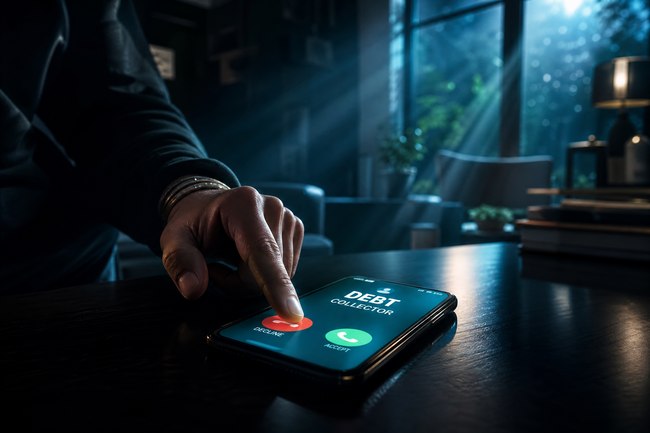
The safest first step depends on what you want to stop and whether the debt is accurate. A request to stop telephone calls is different from a written notice that stops nearly all collector communications. If the debt is unfamiliar or wrong, preserving your dispute rights may be more important than cutting off every channel immediately.
The Debt Survival Guide is led by Jim Prather, a retired CPA with 45 years of experience. Articles are created with AI assistance through a structured research and writing process. Jim provides editorial direction and performs a high-level structural review, but he does not personally write or line-edit every article. Important legal details should be verified through the cited official sources or a qualified professional.
The short answer: If a covered debt collector is calling and you want telephone contact to stop, say clearly, “Stop calling me.” Federal Regulation F generally prohibits that collector from using telephone calls after a person requests that the collector not use that communication medium, subject to limited exceptions. If you want the collector to stop nearly all communication—not only calls—send a written notice, or use an electronic channel the collector accepts, asking it to cease further communication. That broader notice becomes effective when the collector receives it and still allows a few legally permitted messages.
Table of Contents
Choose the Right Request for Your Situation
Do not send the broadest possible letter automatically. Match the request to the problem you are trying to solve.
Stop telephone calls
Best when: you want the phone to stop ringing but still want letters or another channel available.
Action: Tell the collector, “Stop calling me,” identify any specific number it should not use, and document when the request was made.
Stop nearly all communication
Best when: you want a covered collector to cease further communication through all channels.
Action: Send a written notice—or use an accepted electronic channel—requesting that the collector cease further communication. Keep proof of receipt.
Dispute or verify first
Best when: the debt is unfamiliar, inaccurate, already paid, or missing important information.
Action: Preserve your validation-period rights and submit a timely written dispute before you cut off the channel you may need for verification.
The telephone-only rule appears in 12 CFR § 1006.14(h). The broader written cease-communication rule appears in 12 CFR § 1006.6(c). Both rules have exceptions, and both primarily regulate debt collectors covered by the Fair Debt Collection Practices Act—not every original creditor collecting its own account.
1. Confirm Who Is Calling and What the Debt Is
Before discussing payment, ask for the caller’s name, the company’s name, a mailing address, the current creditor, the original creditor if different, and information identifying the account. Do not provide a Social Security number, bank-login information, or other sensitive data merely because a caller demands it.
The FDCPA generally covers third-party debt collectors, collection agencies, debt buyers, and certain other businesses collecting debts owed to someone else. It usually does not apply in the same way to an original creditor collecting its own debt, although other federal or state laws and company policies may still matter. If the company’s identity or account details do not match your records, pause before making a payment or admission.
Unfamiliar debt? A written dispute submitted within the validation period can require a covered collector to stop collection until it sends verification. The period generally ends 30 days after you receive or are assumed to receive the validation information—not simply 30 days after any call. Use the steps in the Debt Validation Letter guide before deciding whether a cease-communication request is the right first move.
The governing dispute procedures are in 12 CFR § 1006.38. Even outside the validation period, you may still raise a dispute, but the same collection-pause requirements may not apply.
2. Decide Whether to Stop Calls, Stop All Contact, or Dispute First
Use a stop-call request when you want another channel to remain open
You can tell a covered debt collector not to use telephone calls. The official interpretation to Regulation F gives the direct example that when a person says “stop calling,” the collector is thereafter prohibited from using telephone calls, subject to limited exceptions. You can also identify one particular number the collector should not use.
A phone request can be useful when you still want mail or an accepted electronic channel available for validation information, settlement proposals, or notices. Write down the date, time, number called, company, representative’s name, and your exact words. If practical, follow up in writing so there is less disagreement about what you requested.
Use a cease-communication notice when you want nearly all contact to stop
A written notice asking a covered collector to cease further communication is broader than a stop-call request. The notice is complete when the collector receives it. The collector may still send limited communications—for example, to say there will be no further contact, to identify a legally available remedy it ordinarily uses, or to say it intends to use a specified remedy.
Use an electronic notice only through a channel the collector accepts for consumer communications. If you mail the notice, keep a copy and use a delivery method that gives you reliable proof of receipt. Certified mail with a return receipt is a practical documentation choice, not a legal guarantee about every disputed fact.
Dispute first when the account may be wrong
If you do not recognize the debt, the amount is wrong, the account was paid, or the collector has not provided enough information, preserve your dispute rights before sending a broad cease-communication notice. A timely written dispute can pause collection until verification is sent. Avoid language that admits liability, promises payment, or supplies information the collector does not need.
3. Make the Request and Keep Proof
- Identify the collector and account. Use the company name, mailing address, account reference, and creditor information shown on the validation notice or other verified record.
- Choose the scope. Say whether you want telephone calls stopped, one number avoided, or nearly all communications ceased.
- Keep the message short. Do not add a payment promise, admit the debt, or argue the full history inside a stop-contact request.
- Preserve a copy. Save the letter, email, portal confirmation, call notes, envelopes, voicemails, and screenshots.
- Record receipt. If you mail a cease-communication notice, consider certified mail and a return receipt. If you use an accepted electronic channel, save the transmission and confirmation.
- Watch for the limited follow-up. A broad notice does not prevent every legally permitted message or legal action.
Do not pay for a special “cease and desist” service. The request does not require legal jargon. It needs to identify the account sufficiently, state what communication you want stopped, and create a record you can preserve.
What a Collector May Still Do
Stopping calls or communications does not erase a debt, decide whether the debt is valid, or require a collector to accept a payment plan. It changes how a covered collector may communicate with you.
Depending on the account, applicable law, and the collector’s ordinary practices, the creditor or collector may still report accurate information to a credit-reporting company, sell or transfer the account, offer a settlement, or file a lawsuit. A court judgment may open remedies such as wage garnishment, a bank levy, or a lien, but the availability and limits of those remedies depend on state law, exemptions, the kind of income or property involved, and proper court process.
If you are considering silence because you do not want to engage, review what may happen when you ignore a debt collector. If the account is old, review the statute of limitations on debt in your state before acknowledging the debt or making a payment. State law can affect whether a payment or written acknowledgment changes a limitations defense.
Do not ignore court papers. A request to stop calls does not stop a lawsuit deadline. If you receive a summons, complaint, garnishment notice, or other court document, read it immediately and consider legal aid or a consumer attorney.
What Seven Calls in Seven Days Really Means
Regulation F does not create a simple universal “seven calls are always legal and the eighth is always illegal” rule. It creates presumptions about whether call frequency violates the prohibition on repeated or continuous calls made with intent to annoy, abuse, or harass.
- A collector is generally presumed to comply with the frequency rule if it does not place more than seven calls within seven consecutive days to a particular person about a particular debt and does not call within seven consecutive days after a telephone conversation about that debt.
- A collector is generally presumed to violate the rule if it exceeds either frequency, subject to exclusions and evidence that may rebut a presumption.
- The counting is generally tied to a particular debt, and some calls are excluded from the numerical presumptions.
- Conduct can still be harassing below those numbers because the language, timing, prior requests, use of several communication channels, and cumulative effect all matter.
The full rule and official interpretations appear in 12 CFR § 1006.14. If the pattern includes threats, repeated calls after a stop request, deceptive statements, or abusive language, the broader record may matter more than a single count. The FDCPA violations guide explains additional warning signs and documentation steps.
If the Calls Continue After Your Request
- Preserve the request and proof of receipt. Keep the exact words, date, time, number, delivery receipt, portal confirmation, or email.
- Log later contacts. Record the date, time, number, representative, communication method, and what was said. Save voicemails, messages, and envelopes.
- Separate prohibited calls from permitted communications. A broad written notice still allows narrow follow-up messages and does not bar a lawsuit or a communication otherwise required by law.
- File a complaint if appropriate. You can submit a complaint through the Consumer Financial Protection Bureau. Your state attorney general or another state regulator may also accept complaints.
- Consider individualized legal help. A consumer attorney or legal-aid organization can evaluate coverage, exceptions, proof, deadlines, and state-law protections.
For an individual FDCPA action, the federal statute permits actual damages and additional damages a court may allow up to $1,000, plus costs and a reasonable attorney’s fee in a successful action. The $1,000 figure is not automatically awarded for every call or every alleged violation. The court considers the frequency, persistence, nature, and intent of the noncompliance. See 15 U.S.C. § 1692k.
Two Templates You Can Adapt
Option 1: Stop telephone calls but keep another channel open
Subject: Request to stop telephone calls regarding account [account reference]
I am requesting that you stop communicating or attempting to communicate with me by telephone at [all telephone numbers / the following telephone number: ___]. Do not call me again. You may send written information about this account to [mailing address or accepted electronic channel].
This request does not admit that I owe the debt. Please update your records to reflect my communication preference.
Sincerely,
[Name]
[Date]
Option 2: Stop nearly all communication
Subject: Cease-communication notice regarding account [account reference]
To Whom It May Concern:
I am writing regarding the account referenced above. Under the Fair Debt Collection Practices Act, 15 U.S.C. § 1692c(c), and applicable Regulation F provisions, I request that you cease further communication with me about this debt except for communications permitted by law.
This notice does not admit that I owe the debt and is not a promise to pay. Please update your records when you receive this notice.
Sincerely,
[Name]
[Mailing address]
[Date]
If the debt is unfamiliar or inaccurate, use a dispute or validation request first or at the same time as appropriate. Keep the requests clearly separated so the collector can understand each one.
Download the revised templates: Printable and fillable Stop-Call and Cease-Communication Templates (PDF). Choose the option that matches your objective, complete every bracketed field, keep a copy, and preserve proof of delivery.
Join Our Newsletter
From time to time, we’ll send information and resources that may help you understand debt-related decisions.
Subscribe to The Debt Survival Guide Newsletter
Disclaimer: The Debt Survival Guide provides educational content only. This is not legal advice. We are not attorneys, tax professionals, or financial advisors. This information should not be considered legal, tax, credit, or individualized financial advice. Debt-collection coverage, deadlines, exceptions, state law, account terms, and available remedies vary by person and situation. Review your records and the cited official sources, and consult a qualified consumer attorney, legal-aid organization, credit counselor, or other appropriate professional before making decisions about your specific circumstances.
References and Sources
- Consumer Financial Protection Bureau — Regulation F § 1006.14: Harassment, call-frequency presumptions, and prohibited communication media
- Consumer Financial Protection Bureau — Regulation F § 1006.6: Cease-communication notices
- Consumer Financial Protection Bureau — Regulation F § 1006.38: Disputes and original-creditor requests
- Consumer Financial Protection Bureau — How to get a debt collector to stop contacting you
- U.S. Code — 15 U.S.C. § 1692k: Civil liability