The first call came at 9:47 on a Tuesday night. By Friday, Lorraine had answered eleven more — the same gravelly voice telling the 58-year-old cafeteria worker she was “a deadbeat,” that a sheriff would arrive by Monday, and that her daughter’s employer “would be hearing about this.” One call landed at 6:12 a.m. Another used profanity she wouldn’t repeat. Lorraine endured it because she really did owe the $3,400 medical bill. What she didn’t know was that nearly every call was illegal — the collector was committing multiple FDCPA violations, and each one gave her the legal power to fight back and collect damages.

At The Debt Survival Guide, our team draws on over 45 years of CPA experience helping everyday people navigate debt collection, credit disputes, and financial recovery. We’ve reviewed the Fair Debt Collection Practices Act line by line, studied how regulators like the CFPB and FTC enforce it, and translated all of it into plain English. This guide shows you exactly what counts as debt collector harassment, how to spot FDCPA violations the moment they happen, and the precise steps — documenting, reporting, and suing — that turn an abusive collector’s misconduct into your leverage.
Table of Contents
What Is the FDCPA and Who Does It Protect?
The Fair Debt Collection Practices Act (FDCPA) is a federal law passed in 1977 that sets strict rules for how third-party debt collectors can behave when collecting consumer debts. Congress wrote it after documenting widespread abuse — threats, obscene language, midnight phone calls, and lies designed to frighten people into paying. The law’s core promise is simple: even if you owe every penny, collectors must treat you with basic dignity. When they don’t, their conduct becomes one of the many recognized FDCPA violations that carry real legal consequences.
The FDCPA covers personal, family, and household debts — credit cards, medical bills, auto loans, personal loans, and past-due utility balances. It generally applies to third-party collectors and debt buyers, not the original creditor collecting its own accounts. That distinction matters: the collection agency calling about your old hospital bill is bound by the FDCPA, while the hospital’s own billing department typically is not (although state laws and the CFPB’s rules may still restrain them). You can read the full statute on the Federal Trade Commission’s website.
Since 2021, Regulation F — the CFPB’s modern rulebook for the FDCPA — has added bright-line limits, including a presumption that calling more than seven times in seven days about a single debt is harassment. Understanding both the statute and Regulation F is the foundation for recognizing FDCPA violations when a collector crosses the line with you.
The Most Common FDCPA Violations Collectors Commit
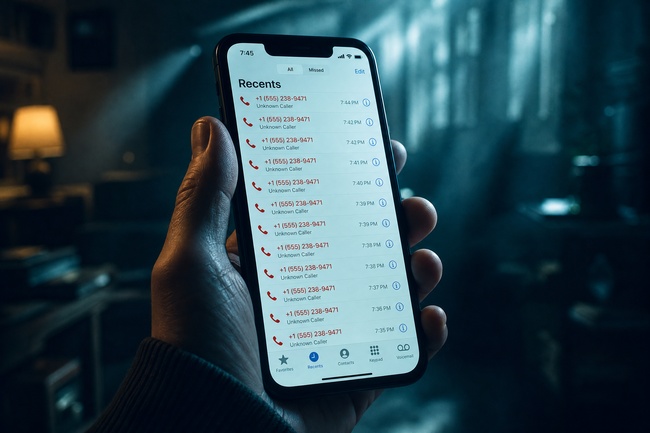
Most FDCPA violations fall into four buckets: harassment and abuse, false or misleading statements, unfair practices, and illegal third-party disclosure. Collectors commit them constantly — debt collection has ranked among the top complaint categories at the CFPB for over a decade. Below are the specific FDCPA violations the law prohibits, organized by category.
Harassment and Abuse (Section 806)
Section 806 of the FDCPA bans conduct meant to harass, oppress, or abuse you. The most common FDCPA violations in this category include calling repeatedly with intent to annoy, using obscene or profane language, threatening violence or harm, publishing your name on a “deadbeat list,” and calling without identifying themselves. A dozen calls in one day may be evidence of harassment, but the number alone does not automatically establish a federal violation; the intent, pattern, excluded calls, and other facts matter.
False or Misleading Statements (Section 807)
Section 807 prohibits any false, deceptive, or misleading representation. Classic examples include claiming to be an attorney or government agent, threatening arrest or jail (you cannot be jailed for consumer debt — see our guide on whether you can go to jail for debt), misstating the amount owed, threatening a lawsuit they never intend to file, and claiming your wages will be garnished tomorrow when no judgment exists. Lies about consequences are among the most damaging FDCPA violations because they manufacture panic that pushes people into payments they can’t afford.
Unfair Practices (Section 808)
Section 808 outlaws unfair or unconscionable collection methods. These FDCPA violations include collecting fees or interest not authorized by your contract or state law, depositing a postdated check early, threatening to take property they have no right to take, and calling you collect to make you pay for the conversation. If a $500 debt has mysteriously grown to $900 with unexplained “collection fees,” you may be looking at a Section 808 violation.
Illegal Contact and Third-Party Disclosure (Sections 805 and 804)
Collectors may only call between 8 a.m. and 9 p.m. in your local time zone, may not call you at work once you tell them your employer prohibits it, and must stop contacting you directly once they know an attorney represents you. They generally may not discuss your debt with family members, neighbors, or coworkers. Limited third-party contact may be allowed to obtain location information, subject to statutory limits, and the collector may not disclose the debt. Our detailed guide on whether debt collectors can call your family or employer covers these rules in depth.
The table below summarizes the most frequent FDCPA violations and where each one appears in the law.
| Collector Behavior | FDCPA Section | Violation Category |
|---|---|---|
| Repeated calls intended to annoy or harass | § 806(5) | Harassment |
| Profanity, insults, or abusive language | § 806(2) | Harassment |
| Threats of violence or harm | § 806(1) | Harassment |
| Threatening arrest or jail | § 807(4) | False statements |
| Pretending to be a lawyer or government agent | § 807(3) | False statements |
| Misrepresenting the amount or status of the debt | § 807(2) | False statements |
| Adding unauthorized fees or interest | § 808(1) | Unfair practices |
| Calling before 8 a.m. or after 9 p.m. | § 805(a)(1) | Illegal contact |
| Discussing your debt with family or coworkers | § 804 / § 805(b) | Third-party disclosure |
| Ignoring a written cease-communication request | § 805(c) | Illegal contact |
How to Identify FDCPA Violations When They Happen to You
Spotting FDCPA violations in real time takes practice, because collectors who commit FDCPA violations rely on adrenaline — yours. When your heart is pounding, a threat of “legal action” sounds terrifying rather than legally suspect. The key is to slow the conversation down and measure everything the collector says and does against a short mental checklist.
First, check the clock. Any call before 8 a.m. or after 9 p.m. your local time is presumptively illegal. Second, count the calls. Under Regulation F, more than seven calls within seven consecutive days about one debt — or any call within seven days of actually speaking with you — is presumed harassment. Third, listen for threats: arrest, jail, violence, taking your home, garnishing wages “next week,” or contacting your boss. Nearly all of these are either outright lies or actions requiring court judgments the collector doesn’t have.
Fourth, notice what they won’t tell you. A collector must provide the validation notice and required information within the period and by the methods required by applicable law stating the amount, the creditor’s name, and your dispute rights. Refusing to identify their company, dodging questions about the debt’s origin, or pressuring you to pay by gift card or wire transfer are hallmarks of FDCPA violations — or of an outright scam that mimics real FDCPA violations. Fifth, ask yourself who else they’ve talked to. If your sister or supervisor got details about your debt, the collector may have violated applicable law; whether the communication supports a violation depends on what was disclosed, to whom, the purpose, exceptions, and the applicable facts.
One more red flag deserves special mention: collectors chasing debts so old the statute of limitations has expired. Threatening to sue on time-barred debt is itself deceptive under the FDCPA. Check our state-by-state guide to the statute of limitations on debt and our explainer on zombie debt to see whether the account being collected is even legally enforceable.
Documenting FDCPA Violations: Build Your Evidence File
Evidence turns your word-against-theirs complaint into a winnable case. The moment you suspect FDCPA violations, start a dedicated evidence file and feed it after every single contact. Courts and regulators respond to patterns, and patterns only emerge from consistent records.

Keep a call log with the date, exact time, phone number, collector’s name and company, and a summary of what was said — especially threats, profanity, or misstatements. Screenshot your phone’s call history showing the frequency of calls; fifteen missed calls from one number in three days is powerful proof of harassment. Save every voicemail, text message, email, and collection letter. Never throw away an envelope, either: a postcard about a debt, or an envelope with visible debt-related language, is its own violation.
Recording calls can be decisive evidence, but consent requirements vary by state and can change. Do not assume that one-party consent applies where you are; check the current law in every applicable state before pressing record. Where recording is not clearly permitted or practical, take verbatim notes during the call and write a full summary immediately afterward, while the details are fresh.
Finally, document the harm. If the calls caused anxiety, lost sleep, missed work, or trouble at your job, write it down with dates. Actual damages like these increase what you can recover when you sue for FDCPA violations, as we’ll cover shortly.
How to Report FDCPA Violations to the CFPB, FTC, and Your State AG
Reporting FDCPA violations costs nothing, takes about twenty minutes, and creates an official paper trail that strengthens any future lawsuit. Two agencies matter most, and you can — and should — file with both.

Start with the Consumer Financial Protection Bureau. File online at consumerfinance.gov/complaint, attach your call logs and letters, and describe each violation specifically (“called 14 times in 5 days,” “threatened arrest on March 3”). The CFPB forwards your complaint to the collection company, which may respond under its current complaint process; no statutory response deadline or outcome is guaranteed. Many collectors suddenly become cooperative once a federal regulator is watching, and the complaint record itself becomes evidence.
Next, report the collector to the Federal Trade Commission at ReportFraud.ftc.gov. The FTC doesn’t resolve individual complaints, but it aggregates reports to identify repeat offenders and has shut down entire abusive collection operations. Finally, file with your state attorney general’s consumer protection division. Many states have their own debt collection statutes with penalties stacked on top of federal law, and some state AGs actively mediate individual complaints.
If the “collector” refuses to identify itself, demands gift cards, or claims you’ll be arrested today, you may be dealing with a scammer rather than a licensed agency — report that to the FTC and your state AG immediately, and do not pay anything until the debt is validated.
Suing for FDCPA Violations: Your Private Right of Action
Here’s the part most consumers never learn: the FDCPA gives you a private right of action, meaning you can personally sue a collector in federal or state court for FDCPA violations — even if you owe the debt. Congress deliberately deputized ordinary consumers as enforcers of the law, and the damages structure makes these cases attractive to attorneys.

Statutory damages under the FDCPA are up to $1,000 per action, not an automatic award. Actual damages require proof of harm, such as documented lost wages, medical expenses, or emotional distress. Attorney fees and costs depend on the statutory requirements and court or settlement outcome. Some consumer attorneys may accept qualifying cases without an upfront fee, but representation is not guaranteed.
FDCPA claims generally have a one-year limitations period, subject to applicable law and the specific claim, so don’t sit on your evidence. To find a lawyer, search the National Association of Consumer Advocates directory or ask your state bar’s referral service for a consumer protection attorney; some may offer consultations, but counsel, fees, evaluation, and outcome depend on the attorney and the facts. Some cases settle before trial, but settlement and litigation outcomes depend on the proof, parties, jurisdiction, and applicable law.

A realistic word of caution: a collector being rude once is unlikely to support a lawsuit, and courts weigh the totality of conduct. But repeated calls, threats, third-party disclosure, or lies about the debt — especially in combination, like Lorraine’s case — are exactly what the statute was written to punish. And if the collector has sued you first, FDCPA violations can become a counterclaim; see our step-by-step guide if you’ve been sued for credit card debt.
How to Stop Debt Collector Harassment Immediately
While complaints and lawsuits work through the system, two letters can stop the phone from ringing this week. Both must be sent in writing, by certified mail with return receipt requested, so you have dated proof of delivery.

The first is a debt validation letter. If you send it within the applicable 30-day period after the collector’s initial validation notice, a timely written dispute can require the collector to pause collection activity until it mails you adequate verification of the debt. The timing and protection depend on the notice, the written request, and the facts. Use our free debt validation letter template to send yours today — and do not assume that every late request or every call before verification is automatically a separate FDCPA violation.
The second is a cease-communication letter under Section 805(c). Once the collector receives your written demand to stop contacting you, further contact is generally limited, but the statute permits a limited follow-up to confirm cessation or notify you of a specific remedy such as a lawsuit. A post-letter contact is not automatically a violation without considering the request, the permitted purpose, and the surrounding facts. Our complete guide on how to stop debt collectors from calling walks through the exact wording, mailing steps, and what to expect afterward.
One strategic note: a cease letter stops the calls, but it doesn’t erase the debt. A collector who can’t call you may decide to sue instead, so pair the cease letter with a plan — validation first, then negotiation, settlement, or a legal defense as your situation requires. Ignoring the underlying debt entirely carries its own risks, which we cover in what happens if you ignore a debt collector.

Here is an illustrative scenario: six weeks after a consumer’s first sleepless night, a certified cease letter has been delivered, a CFPB complaint has prompted a written response, and a consumer attorney has evaluated the evidence. If the evidence supports a claim, a settlement or court judgment may include statutory damages and reasonable attorney fees under the applicable law. The outcome depends on the documented conduct, available proof, and court or settlement terms.
FAQ: FDCPA Violations and Debt Collector Harassment
What are the most common FDCPA violations?
The most common FDCPA violations are repeated harassing phone calls, threats of arrest or lawsuits the collector can’t or won’t file, profane or abusive language, misrepresenting the amount owed, calling before 8 a.m. or after 9 p.m., discussing your debt with third parties, and continuing to call after receiving a written cease-communication request. Complaint volumes and rankings change over time; current CFPB data should be checked before making a ranking claim.
How many calls from a debt collector count as harassment?
Under Regulation F, a collector is presumed to violate the law if it calls you more than seven times within seven consecutive days about a single debt, or calls within seven days of having a phone conversation with you about that debt. Even fewer calls may violate the FDCPA if the pattern and circumstances establish intent to annoy, abuse, or harass — such as back-to-back calls or letting the phone ring continuously.
How much money can I get for FDCPA violations?
Statutory damages under the FDCPA are up to $1,000 per action, not an automatic award. Actual damages require proof of harm, such as documented lost wages, medical expenses, or emotional distress. Attorney fees and costs depend on the statutory requirements and court or settlement outcome. Some consumer attorneys may accept qualifying cases without an upfront fee, but representation is not guaranteed.
Can I sue a debt collector if I actually owe the debt?
Yes. The FDCPA regulates collector conduct, not the validity of the debt. Owing money does not give anyone the right to threaten, deceive, or harass you. If a collector commits FDCPA violations while collecting a legitimate debt, you may be able to sue within one year of the violation, subject to the applicable facts and legal requirements, and seek any statutory or actual damages and attorney fees available under the law.
Do FDCPA rules apply to the original creditor?
Generally, no. The FDCPA applies to third-party debt collectors, collection agencies, debt buyers, and collection law firms — not to original creditors collecting their own accounts under their own name. However, many states have laws extending similar protections to original creditors, and the CFPB can still act against creditors for unfair or deceptive practices, so abusive conduct is worth reporting regardless of who commits it.
How do I report FDCPA violations?
File a complaint with the CFPB, report the collector to the FTC at ReportFraud.gov, and contact your state attorney general’s consumer protection office. Attach your call logs, letters, and screenshots. Filing is free, but a complaint does not guarantee a particular response or lawsuit outcome.
Join Our Newsletter
From time to time, we’ll send you information and resources that we believe may be helpful to you.
Subscribe to The Debt Survival Guide Newsletter
Disclaimer: The Debt Survival Guide provides educational content only. We are not attorneys, tax professionals, or financial advisors. This information should not be considered legal, tax, housing, credit, or individualized financial advice. Circumstances, agreements, deadlines, laws, and available options vary by person, account, location, and situation. Please review your records and written terms and consult a qualified attorney, legal-aid organization, HUD-approved housing counselor, tax professional, credit counselor, or financial professional before making decisions about your specific situation.