When Denise saw water spreading across the kitchen ceiling, her first thought was not about paint or drywall. It was the charge that might land on a credit card before payday. She called a contractor, opened a notes app, and started writing down questions instead of agreeing to the first number she heard. That small pause gave her room to separate what had to happen today from what could wait. The goal is to pay for home repair without debt. This keeps the decision focused on how to pay for home repair without debt.

A major home repair can feel like an emergency even when every decision does not need to be made immediately. The safest approach is to protect people and the property first, define the work, compare the total cost, look for assistance you may qualify for, and choose a payment plan that does not create a second crisis. This guide walks through six practical steps for paying for necessary home repairs without turning a short-term problem into a long-term debt spiral. The goal is to pay for home repair without debt. This keeps the decision focused on how to pay for home repair without debt.
At The Debt Survival Guide, our team draws on over 45 years of CPA experience helping households evaluate financial decisions with clarity and caution. Home repairs often combine household cash flow, contracts, borrowing, and property decisions, so this guide focuses on practical questions and general consumer information rather than promising a particular financing result. This guide is general education, not individualized financial advice, and circumstances vary by topic, facts, timing, jurisdiction, and household. This guide covers safety triage, written estimates, assistance screening, cash-flow planning, and financing risk in that order. This guide addresses how to pay for home repair without debt when repairs compete with ordinary bills.
Table of Contents
Quick Overview
- Protect people and the property first, then separate emergency stabilization from improvements that can wait.
- Define the repair in writing and compare estimates, materials, permits, payment terms, and change-order risk.
- Check cash flow, assistance, counseling, and financing risk before accepting a payment that could crowd out essential bills.
- Keep every estimate, contract, receipt, claim record, and payment date together so changes can be reviewed before commitment.
Use the detailed sections below for conditions, exceptions, records, and timing.
How can you pay for a major home repair without creating more debt?
Start by separating the urgent safety or damage-control work from improvements that can wait. Then obtain a written description of the work and more than one estimate, identify assistance or lower-risk cash-flow options, and compare any financing by its total cost, payment schedule, fees, and consequences if your income changes. A payment that fits only under perfect conditions is not a safe payment. The objective is not simply to get the repair started; it is to protect the home while preserving enough room for ordinary bills and unexpected expenses. The goal is to pay for home repair without debt.
Before signing a financing agreement, compare the payment with the bills that cannot be postponed, the cash reserve you need to keep, and a realistic lower-income month. A repair may be necessary, but the financing decision still needs a stopping point. If the written scope, assistance search, and payment test do not line up, pause the optional work and ask another question before committing. The goal is to pay for home repair without debt. This keeps the decision focused on how to pay for home repair without debt.
Step 1: Protect people and stop the damage from growing
Before thinking about loans, decide what must be done to make the situation safe. A broken water line, active roof leak, failed furnace during dangerous weather, exposed electrical wiring, or structural concern may call for immediate professional attention. That does not mean every related improvement is urgent. Ask the contractor to separate emergency stabilization from later replacement, appearance upgrades, or convenience features. If water is involved, document the damage with photographs and notes, and contact your insurer or property manager when appropriate. Keep receipts and written communications in one place. The goal is to pay for home repair without debt.
Do not let urgency erase basic questions. Ask what work prevents further damage, what can safely wait, how quickly the first step must occur, and what temporary measure is available. If you rent, review your lease and notify the landlord or property manager before authorizing work that is not your responsibility. If you own the property, local permits, inspection requirements, and insurance terms may matter. A contractor’s verbal statement is not a substitute for checking the agreement that governs your situation. If a payment issue may become a creditor problem, Credit Card Hardship Programs: What Banks Don’t Tell You can help you identify questions to ask before adding a new balance.
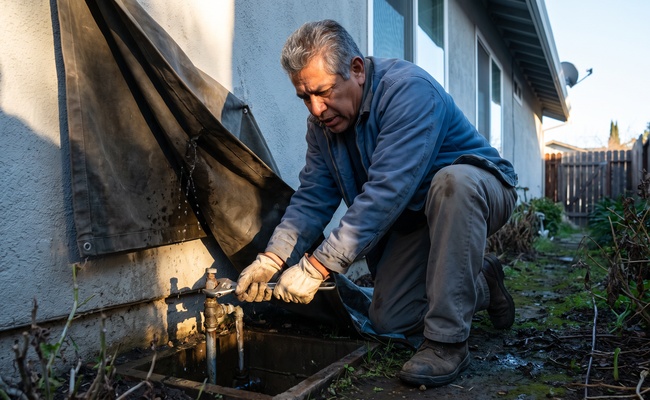
Also distinguish a temporary measure from a complete repair. A tarp that stops a leak, a shutoff that limits water damage, or a safe temporary heat source may buy time, but it may not solve the underlying problem. Ask the contractor to identify the expected life and limits of a temporary step, what inspection is needed next, and whether using it affects a warranty or claim. That information helps you decide whether a smaller immediate payment protects the property while you compare the larger project. It also keeps a short-term fix from quietly becoming an open-ended series of charges.
Step 2: Define the repair before you compare the price
A vague repair request produces vague prices. Ask for a written estimate that describes the work, materials, expected completion date, and price. The Federal Trade Commission’s home-improvement guidance recommends getting multiple estimates and reading the contract carefully. It also warns against pressure, blank documents, full payment up front, and contractor-arranged financing that you have not compared independently.
When estimates arrive, place them side by side. Look for differences in labor, materials, disposal, permits, cleanup, warranties, and allowances for unknown conditions. A lower bid may leave out a necessary part of the work; a higher bid may include an upgrade you do not need. Ask each contractor to explain a large difference rather than choosing by headline price alone. Write down every question and answer, and do not sign until blank spaces are completed and the final scope is understandable. The goal is to pay for home repair without debt. This keeps the decision focused on how to pay for home repair without debt.
Check licensing and insurance through the appropriate state or county office, ask for proof of insurance, and seek recommendations from people you trust. HUD warns consumers about deceptive home-improvement contractors and advises working with HUD-approved Title 1 or 203(k) lenders when using those programs. That advice does not guarantee a contractor’s work, but it reinforces the value of checking the lender, contractor, scope, and payment arrangement separately. The goal is to pay for home repair without debt. This keeps the decision focused on how to pay for home repair without debt.

Payment terms deserve the same attention as the workmanship. A reasonable contract should identify the deposit, progress-payment milestones, final payment, cancellation terms, change-order process, and who owns materials if the project stops. Ask whether the contractor uses subcontractors and how lien waivers or receipts will be handled when applicable in your area. Avoid paying in cash when a traceable method gives you a clearer record, and be cautious if someone insists on a large deposit before providing a written scope. Pressure to decide immediately is not proof that a repair is fraudulent, but it is a reason to slow down and verify.
This helps a household pay for home repair without debt while keeping the decision tied to its actual cash flow. This keeps the decision focused on how to pay for home repair without debt. This is the practical meaning of deciding how to pay for home repair without debt.
Step 3: Build a repair cash-flow plan before borrowing
Next, map the repair against the money that is actually available. Start with current checking and savings balances, then subtract bills due before the next reliable income arrives. Do not count money that is already committed to rent, mortgage, utilities, food, insurance, transportation, taxes, or minimum debt payments. If the repair will be paid in stages, list the expected dates rather than treating the project price as one abstract number. If several obligations are already competing for the same cash, Drowning in Debt? Here is What to Do First offers a broader starting framework for sorting urgent bills from decisions that can wait.

A simple plan can use three columns: money available now, money expected before each payment, and money that must remain untouched. The last column matters. Using every dollar of savings for the repair may leave no room for a prescription, a car problem, or a temporary income interruption. Conversely, putting a nonessential improvement on a high-cost card because the contractor offers a convenient checkout process may create a payment that lasts longer than the repair’s useful life. The goal is to pay for home repair without debt. This keeps the decision focused on how to pay for home repair without debt.
Step 4: Screen for assistance before choosing expensive credit
Before borrowing, look for programs and counseling that may fit your property, location, age, income, or repair type. USA.gov explains that eligibility for home-repair and improvement programs varies and may depend on income, age, property type, and location. It also warns that the federal government does not offer “free money” to individuals for home repairs and that advertisements promising it may be scams.
HUD identifies several categories of help, including Title 1 property-improvement loans, the 203(k) rehabilitation mortgage-insurance program, community-based programs, and programs for certain groups or locations. These are not automatic approvals, and a program that appears on a general government page may not fit your project. Start with the program’s current eligibility and application information. Ask what expenses qualify, whether the work must be completed by an approved contractor, how payments are made, and what happens if the estimate changes. The goal is to pay for home repair without debt. This keeps the decision focused on how to pay for home repair without debt.
You can also use HUD’s housing-counseling search to locate a participating agency and ask whether it offers home-improvement or repair counseling. A counselor cannot promise that funds will be available, but an informed conversation may help you identify questions, local programs, or budgeting issues before you sign a financing agreement. Be cautious with anyone who demands an immediate fee, guarantees government money, or asks you to sign a blank form.

When you contact an assistance program, prepare a short packet rather than relying on memory. Include the property address if requested, the repair description, estimates, photographs, insurance information, household income documents, and the date by which the work may become unsafe. Ask which documents are required, how long review normally takes, and whether applying creates any obligation to use a particular lender or contractor. Keep copies of what you submit and write down the name of the agency, the date of contact, and any stated deadline. The goal is to pay for home repair without debt.
If a program is not available, that record can still help you avoid repeating incomplete applications and can clarify what other options remain. The goal is to pay for home repair without debt. This keeps the decision focused on how to pay for home repair without debt. This is the practical meaning of deciding how to pay for home repair without debt.
Step 5: Compare financing by total cost and risk
If cash and assistance do not cover the repair, compare financing options on more than the monthly payment. Write down the amount borrowed, interest rate, fees, repayment length, payment frequency, total scheduled payments, and what secures the debt. Then test the payment against a lower-income month. Ask whether the payment would still be manageable if the repair costs more than expected or another household bill rises. The goal is to pay for home repair without debt. This keeps the decision focused on how to pay for home repair without debt.
A credit card may be convenient, but interest can make a repair much more expensive if the balance remains after an introductory period or if the minimum payment stretches repayment. A personal loan may offer a fixed schedule, but fees and the payment amount still matter. A home-equity product may use the home as security, so missed payments can carry consequences beyond a damaged credit score. Do not assume that a contractor’s recommended lender is the cheapest or safest option; compare it with independent offers and read the documents yourself. This keeps the decision focused on how to pay for home repair without debt.
If you compare a card or other revolving option, How to Successfully Negotiate a Lower Credit Card Interest Rate explains one question that may reduce the cost of an existing balance, although it does not make new borrowing automatically affordable.

Be especially careful with financing tied to property taxes or the home itself. The Consumer Financial Protection Bureau’s PACE guidance explains that PACE payments can be collected through property-tax bills and may create fees, interest, tax-sale risk, difficulties selling or refinancing, and loss of equity if payments are not affordable. Those warnings apply specifically to the PACE structure; they are not a reason to assume every home-repair financing product has identical terms. They are a reminder to understand the product before signing.
Use a written decision filter before accepting any offer. First, ask whether the payment leaves enough for housing, utilities, food, transportation, insurance, and minimum debt obligations. Second, ask what happens if the project runs over budget or your income is temporarily lower. Third, ask whether the interest rate can change, whether a promotional rate expires, whether fees are added to the balance, and whether the debt is secured by the home. Finally, ask how quickly you could pay the balance if the repair is smaller than expected. The goal is to pay for home repair without debt.
If the lender or contractor will not explain these points in plain language, do not treat speed as a benefit. The goal is to pay for home repair without debt. This keeps the decision focused on how to pay for home repair without debt. This is the practical meaning of deciding how to pay for home repair without debt.
Step 6: Choose the payment sequence that protects your next bills
Once you know the repair scope, available cash, assistance possibilities, and financing terms, choose a payment sequence rather than reacting to each invoice. Bing organized will greatly help you pay for home repair without debt. You might pay for emergency stabilization first, reserve enough cash for ordinary bills, and schedule later work only after the final scope is confirmed. If a contractor requires deposits or progress payments, compare each payment date with your income and fixed obligations. Ask what happens if the project pauses, materials are delayed, or the final cost changes. The goal is to pay for home repair without debt. This keeps the decision focused on how to pay for home repair without debt.
If no available option fits without putting essential bills at risk, pause nonessential work and seek outside guidance. A delay can be frustrating, but a repair payment that causes missed housing, utility, insurance, or food expenses may create a more urgent problem. The safest choice may be a smaller temporary repair, a second estimate, a conversation with a housing counselor, or a request for a payment arrangement that you understand and can document. If you need to explain a temporary hardship to a creditor, Hardship Letter to Creditors: 7 Practical Ways Forward may help you organize the facts and request without promising approval.

Before the first payment leaves your account, make a final one-page summary. Write the repair total, the amount due now, each later payment, the money you are keeping in reserve, and the exact action you will take if the price changes. Add the contractor’s contact information, the insurer or program contact, and the date you will review the next step. This summary is not a substitute for the contract, policy, or lender documents. It is a practical check that the plan you are about to follow still matches the money you have and the obligations you cannot miss.
If the summary does not fit, that is a signal to ask another question before committing. This keeps the decision focused on how to pay for home repair without debt. This is the practical meaning of deciding how to pay for home repair without debt.
What to Do Next
Today, write down the exact repair problem, separate the urgent work from the optional work, and request at least two written estimates. Before you discuss financing, compare the payment dates with your next bills and check whether a local, state, HUD, or community program may apply. Do not sign a blank document, pay the entire project up front, or accept a contractor-arranged loan without comparing its complete terms. The goal is to pay for home repair without debt. This keeps the decision focused on how to pay for home repair without debt.
Frequently Asked Questions
Should I use my emergency fund for a major home repair?
Answer: It may be reasonable to use some savings for a necessary repair, but do not assume every dollar is available. Keep enough for essential bills and a buffer for another unexpected expense. Compare the cost of using savings with the total cost and risk of borrowing, and avoid replacing one emergency with unaffordable payments.
How many contractor estimates should I get?
Answer: Three written estimates can provide a useful comparison when timing and safety allow. If immediate stabilization is necessary, document why the first work could not wait and obtain additional estimates for later phases. Compare scope, materials, deadlines, permits, payment terms, and warranties—not just the final number.
Can a government program pay for my repair?
Answer: Some federal, state, local, and community programs may help eligible applicants, but availability and requirements vary. Start with current information from USA.gov, HUD, or the relevant local agency. Treat promises of guaranteed “free money” as a warning sign, especially when someone demands money or personal information before explaining eligibility.
Is a home-equity loan automatically a bad choice for repairs?
Answer: No financing product is automatically right or wrong for every household. A home-equity loan or line of credit may put the home at risk if payments are not made, and fees, rate changes, and repayment terms matter. Compare independent options and consider whether the payment remains manageable if income or expenses change.
What if the contractor changes the price after work begins?
Answer: Ask for a written change order explaining the new work, reason, price, and effect on the completion date. Do not approve an unexplained change verbally or sign a document with blank spaces. Keep the original estimate, contract, invoices, and messages together so you can see what changed.
What should I keep from the contractor before paying?
Answer: Keep the written estimate, signed contract, change orders, permits, invoices, receipts, warranty terms, and messages about scope or payment dates. Store photographs and insurance communications with those records so you can compare what was promised with what was completed.
How can I avoid turning a repair into a debt spiral?
Answer: Separate urgent work from optional improvements, preserve a reserve for essential bills, compare total financing costs, and do not accept a payment that works only in a best-case month. If no option fits, seek another estimate or qualified housing and financial guidance before committing.
Here Are More Articles That Might Interest You
If a home repair is competing with several existing bills, How to Create a Realistic Debt Repayment Budget can help you see what money is genuinely available before you add a new payment.
If paying for the repair would use most of your savings, Should You Use Your Emergency Fund to Pay Off Debt? may help you think through the tradeoff between protecting cash and reducing a balance.
If the repair is competing with several urgent obligations, The Priority Debt Checklist: Which Debts to Pay First offers a framework for organizing deadlines and consequences before choosing which bill receives limited money.
If your income changes from one pay period to the next, How to Budget When Your Income Is Irregular can help you build the repair plan around dependable cash flow instead of an unusually strong month.
If the repair payment must fit between paydays, How to Budget by Paycheck Instead of by Month can help you place deposits, progress payments, and ordinary bills on a practical timeline.
If you are considering a new balance while another debt is still open, How to Use a Credit Card During Debt Payoff can help you identify the questions to ask before adding another charge.
If a vehicle repair is another pressure on the same household budget, How to Plan for a Major Car Repair Without New Debt may help you compare timing, cash flow, and alternatives across competing needs.
If you need help evaluating the household budget before choosing a lender, Nonprofit Credit Counseling vs. Debt Settlement: Which Is Better? explains why the type of help matters when you are looking for guidance.
Join Our Newsletter
From time to time, we’ll send you information and resources that we believe may be helpful to you. This keeps the decision focused on how to pay for home repair without debt.
Subscribe to The Debt Survival Guide Newsletter
Disclaimer: The Debt Survival Guide provides educational content only. We are not attorneys, tax professionals, or financial advisors. This information should not be considered legal, tax, housing, credit, or individualized financial advice. Circumstances, agreements, deadlines, laws, and available options vary by person, account, location, and situation. Your records and written terms may matter for a home repair, contractor agreement, insurance claim, financing arrangement, or assistance program. Please review your records and written terms and consult a qualified attorney, legal-aid organization, HUD-approved housing counselor, tax professional, credit counselor, or financial professional before making decisions about your specific situation.