When Robert received a call from a debt relief company promising to cut his $38,000 in credit card debt in half, it sounded like a miracle. But his neighbor, who had faced a similar situation two years earlier, told him she had gone through nonprofit credit counseling instead and paid off everything without destroying her credit score. Robert was confused because both options claimed to help people in debt, yet the approaches seemed completely opposite. Understanding credit counseling vs debt settlement is essential before committing to either path because choosing the wrong one can cost you thousands of dollars and years of credit damage that could have been avoided.

At The Debt Survival Guide, our team draws on over this guide provides general educational information to help you understand the real differences between these two approaches. We have seen people thrive with credit counseling and others benefit from settlement, but we have also seen people devastated by choosing the wrong option for their specific situation. The decision between credit counseling vs debt settlement depends on your total debt amount, your income stability, your credit score priorities, and how quickly you need relief.
This guide gives you the complete picture so you can make an informed choice rather than relying on marketing promises from companies that profit from your confusion. By the end of this article, you will know exactly which option fits your situation and why the credit counseling vs debt settlement decision is not as simple as settlement companies want you to believe.
Table of Contents
How Nonprofit Credit Counseling Works
Nonprofit credit counseling agencies provide free or low-cost financial education and, when appropriate, enroll you in a debt management plan. During your initial consultation, a certified counselor reviews your complete financial picture including income, expenses, debts, and goals. This assessment is typically free and carries no obligation to enroll in any program, which makes it an excellent first step regardless of where you ultimately land in the credit counseling vs debt settlement decision. The Consumer Financial Protection Bureau maintains resources to help you find legitimate nonprofit counseling agencies in your area.

If the counselor determines a debt management plan is appropriate, the agency negotiates directly with your creditors to reduce interest rates, waive fees, and establish a fixed monthly payment schedule. You make one monthly payment to the agency, and they distribute it to your creditors according to the negotiated terms. Most debt management plans last three to five years, during which you pay back 100% of your principal balance but at significantly reduced interest rates that can drop from 20% or higher to between 6% and 10%.
This interest reduction alone can save you tens of thousands of dollars compared to paying minimum payments on your own, making credit counseling vs debt settlement a question of total cost rather than just principal reduction. The monthly payment through a debt management plan is typically 20% to 40% lower than what you were paying in combined minimums, which provides immediate cash flow relief while still making meaningful progress toward becoming debt-free.
The key distinction in the credit counseling vs debt settlement comparison is that credit counseling keeps your accounts in good standing. You continue making payments, your accounts are not reported as delinquent, and your credit score suffers minimal damage. Many people actually see their scores improve during a debt management plan as their balances decrease and their payment history remains positive. This credit preservation is the single biggest advantage when weighing credit counseling vs debt settlement for people who need their credit score intact for housing, employment, or future borrowing.
How Debt Settlement Works
Debt settlement takes a fundamentally different approach. Settlement companies or individuals negotiate with creditors to accept a lump sum payment that is less than the full balance owed, typically 40% to 60% of the original debt. The creditor agrees to forgive the remaining balance in exchange for receiving immediate partial payment rather than risking receiving nothing if the debtor files bankruptcy. This negotiation dynamic is what makes credit counseling vs debt settlement so different at their core because counseling works within the existing system while settlement exploits the creditor’s fear of total loss.
The critical difference in credit counseling vs debt settlement is what happens during the negotiation period. Most settlement programs instruct you to stop making payments to your creditors and instead deposit money into a dedicated savings account. This deliberate default creates leverage because creditors become more willing to negotiate when they believe they may receive nothing. However, this strategy means your accounts go delinquent, late fees accumulate, and your credit score drops significantly during the process. This intentional default is what makes credit counseling vs debt settlement such a stark choice because one path protects your credit while the other deliberately destroys it as a negotiation tactic.

Settlement programs typically take two to four years to complete, depending on how many accounts you have and how quickly you can accumulate enough savings to make lump-sum offers. During this time, you may face collection calls, potential lawsuits, and the stress of knowing your accounts are in default. This risk exposure is a critical factor in the credit counseling vs debt settlement comparison that many people underestimate until they are living through it. If you are already dealing with aggressive collectors, understanding your rights under the FDCPA provides important protections during this vulnerable period.
Credit Score Impact: The Critical Difference
For many people, the credit score impact is the deciding factor in the credit counseling vs debt settlement decision. The impact on your credit score is where these two approaches diverge most dramatically. With credit counseling through a debt management plan, your credit report may show a notation that accounts are being paid through a counseling agency, but your payment history remains positive. Most people experience a temporary dip of 20 to 50 points when enrolling but recover quickly as balances decrease. Some people even see net improvements within the first year. This relatively gentle credit impact is why financial advisors overwhelmingly recommend exploring credit counseling vs debt settlement before jumping straight to settlement.
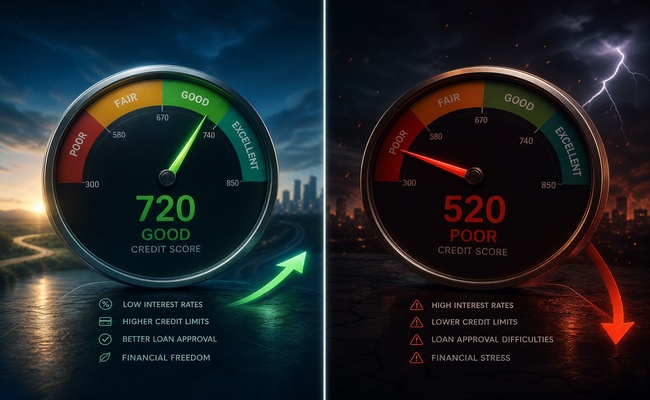
Debt settlement causes severe credit damage. Each account that goes delinquent during the settlement process generates negative marks including late payments, charge-offs, and settled-for-less-than-owed notations. The total credit score impact typically ranges from 100 to 200 points or more, depending on your starting score and the number of accounts involved. These negative marks remain on your credit report for seven years from the date of the first missed payment. Our detailed guide on how debt settlement affects your credit timeline explains exactly what to expect month by month.
When evaluating credit counseling vs debt settlement, consider carefully how important your credit score is to your near-term plans. If you need to rent an apartment, buy a car, or refinance a mortgage within the next two to three years, the credit damage from settlement could cost you far more in higher interest rates and denied applications than you saved on the settled debt.
Total Cost Comparison
The financial math between credit counseling vs debt settlement is not as straightforward as settlement companies suggest. Settlement companies advertise that you will pay only 50% of what you owe, but this calculation ignores several hidden costs. Settlement fees typically range from 15% to 25% of the enrolled debt amount. Late fees and penalties accumulate during the months or years you are not paying. And any forgiven debt over $600 is reported to the IRS as taxable income on Form 1099-C, which can create an unexpected tax bill. Our guide on taxes on settled debt explains this often-overlooked cost in detail.

Credit counseling through a debt management plan has lower total costs for most people. The Federal Trade Commission notes that legitimate nonprofit agencies charge modest monthly fees, typically $25 to $50, and the reduced interest rates save thousands over the life of the plan. You pay back your full principal but with dramatically less interest, and there are no tax consequences because no debt is forgiven. These hidden savings make the true cost comparison of credit counseling vs debt settlement much closer than the headline numbers suggest.
For someone with $30,000 in credit card debt at 22% average interest, a debt management plan at 7% interest over four years costs approximately $34,500 total including fees. The same debt through settlement at 50% plus 20% fees plus accumulated penalties and taxes might cost $22,000 to $26,000 but with devastating credit consequences. The question in credit counseling vs debt settlement is whether saving $8,000 to $12,000 is worth seven years of damaged credit and the stress of deliberate default. For many people, the math favors credit counseling when you factor in the higher interest rates you will pay on future loans, apartments, and insurance due to damaged credit.
Who Should Choose Credit Counseling
Credit counseling is the better choice when you can afford to repay your full principal balance over three to five years with reduced interest rates. It works best for people who have steady income, want to protect their credit score, and are willing to commit to a structured payment plan. If your total unsecured debt is less than 50% of your annual income, credit counseling through a debt management plan is almost always the superior option in the credit counseling vs debt settlement decision. The reduced interest rates make the debt manageable without requiring you to default or damage your financial reputation.

Credit counseling is also ideal for people who need accountability and structure. The single monthly payment simplifies your financial life, and the agency handles all creditor communication on your behalf. You no longer juggle multiple due dates, negotiate with collectors, or worry about which bill to pay first. If you are currently overwhelmed by managing multiple debts, our guide on what to do first when drowning in debt provides a triage framework that often leads people toward counseling as the right first step.
Who Should Choose Debt Settlement
Debt settlement makes more financial sense when you genuinely cannot repay your full principal balance even with reduced interest rates. If your total unsecured debt exceeds your annual income, if you are already significantly behind on payments, or if the alternative is bankruptcy, then settlement may be the pragmatic choice. In the credit counseling vs debt settlement analysis, settlement is essentially a last resort before bankruptcy rather than a first-line strategy. It exists for people who have no realistic path to full repayment even with reduced interest rates. If you find yourself in this position, understanding the full credit counseling vs debt settlement landscape ensures you approach settlement strategically rather than desperately.
Settlement also makes sense when your credit is already severely damaged. If your accounts are already in collections, your score has already taken the major hit, and the additional damage from settlement is marginal compared to the financial relief it provides. People who are already being sued for debts or facing wage garnishment may find that settlement resolves immediate legal threats faster than a five-year repayment plan. Understanding whether you might be judgment proof can also influence your decision between credit counseling vs debt settlement because if creditors cannot collect from you regardless, settlement becomes less urgent. The Fair Debt Collection Practices Act still protects you during settlement negotiations regardless of your account status.

If you are considering settlement, strongly consider doing it yourself rather than paying a company 15% to 25% in fees. The negotiation process is straightforward, and our guide on how to negotiate a debt settlement walks you through the exact steps. Self-negotiation eliminates the largest hidden cost in the credit counseling vs debt settlement equation and puts more money back in your pocket. Many people save $5,000 to $10,000 by handling negotiations themselves rather than paying a company to do it. This self-directed approach changes the financial math of credit counseling vs debt settlement significantly in favor of settlement for those who are willing to do the work themselves.
Red Flags to Watch For
Regardless of which path you choose in the credit counseling vs debt settlement decision, watch for warning signs of predatory companies. Any company that guarantees specific results, charges large upfront fees before performing services, tells you to stop communicating with creditors without explaining the consequences, or pressures you to enroll immediately is likely not acting in your best interest.
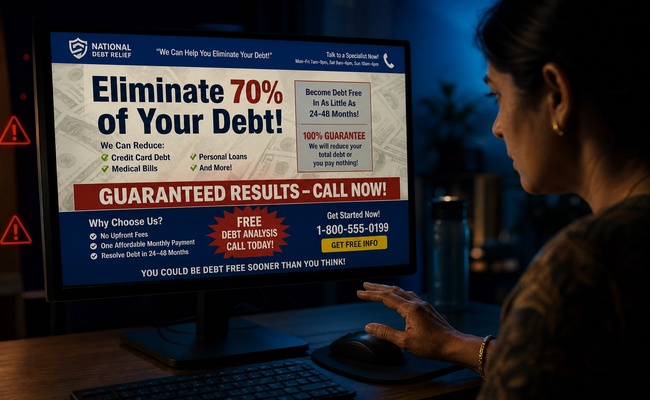
Legitimate nonprofit credit counseling agencies are accredited by the National Foundation for Credit Counseling or the Financial Counseling Association of America. They offer free initial consultations, clearly disclose all fees, and never pressure you into a program. Legitimate settlement companies do not charge fees until they successfully negotiate a settlement, as required by the FTC’s Telemarketing Sales Rule. Any deviation from these standards is a red flag that should send you looking elsewhere. Taking time to verify credentials before enrolling in any program is one of the most important steps in the credit counseling vs debt settlement process because a bad company can make your situation dramatically worse.
The most important thing to remember about credit counseling vs debt settlement is that neither option is universally better or worse. The right choice depends entirely on your specific financial situation, your debt-to-income ratio, your credit score priorities, and your emotional tolerance for risk and uncertainty. Take the time to get a free consultation from a nonprofit counselor before making any decision, because that objective assessment costs nothing and could save you thousands. A good counselor will honestly tell you whether credit counseling vs debt settlement is the better fit for your specific numbers, and they have no financial incentive to push you toward either option.
Frequently Asked Questions
Can I use credit counseling and debt settlement together?
Generally no, and this is one of the clearest distinctions in the credit counseling vs debt settlement comparison. Credit counseling through a debt management plan requires you to make regular payments on all enrolled accounts, while settlement requires you to stop paying. These approaches are fundamentally incompatible. However, you could use credit counseling for some accounts and settle others that are already severely delinquent, though this hybrid approach requires careful planning and ideally guidance from a nonprofit counselor who understands both sides of the credit counseling vs debt settlement equation.
How long does each option take to complete?
Credit counseling through a debt management plan typically takes three to five years. Debt settlement programs usually take two to four years depending on how quickly you can accumulate savings for lump-sum offers. When comparing credit counseling vs debt settlement timelines, settlement can be faster but carries significantly more risk and credit damage during the process. The total recovery time including credit rebuilding is often similar for both options, which is why the credit counseling vs debt settlement timeline comparison should include the full recovery period rather than just the program duration.
Will creditors still call me during credit counseling?
Once enrolled in a debt management plan, creditor calls typically stop within one to two weeks as the agency notifies all enrolled creditors of your participation. This immediate relief from harassment is a major quality-of-life advantage in the credit counseling vs debt settlement comparison. This is a significant quality-of-life benefit that settlement does not provide during the negotiation period, when collection calls often intensify due to deliberate non-payment.
What happens if I cannot complete a debt management plan?
If you drop out of a debt management plan, your interest rates revert to their original levels and any waived fees may be reinstated. However, your payment history during the plan remains positive on your credit report. You can re-enroll later or explore other options. Dropping out of a credit counseling plan is far less damaging than dropping out of a settlement program where you have already defaulted on accounts.
Is there a minimum debt amount for either option?
Most credit counseling agencies accept clients with any amount of unsecured debt, though debt management plans are most beneficial for balances above $5,000. Settlement companies typically require minimum enrolled debt of $7,500 to $10,000 because their fee structure does not work economically on smaller amounts. For smaller debts, credit counseling vs debt settlement may be less relevant because direct negotiation or accelerated payment is often the best approach.
Can I switch from settlement to credit counseling midway through?
Yes, but with consequences. If you have already defaulted on accounts during a settlement program, those negative marks remain on your credit report regardless of switching to credit counseling afterward. However, enrolling in a debt management plan can stop further damage and begin rebuilding your payment history immediately. The sooner you make the switch in the credit counseling vs debt settlement journey, the less total damage your credit sustains.
Do I need good credit to qualify for credit counseling?
No. Many nonprofit credit counseling agencies offer counseling without a minimum credit-score requirement, although debt management plan enrollment depends on the agency, the creditors, and your ability to make the proposed monthly payment. This accessibility can be an advantage when evaluating credit counseling vs debt settlement, but ask each provider about its eligibility rules.
Here Are More Articles That Might Interest You
If you are comparing all your options, our guide on bankruptcy vs debt settlement explains when filing makes more sense than negotiating.
Learn about debt management plan pros and cons for a deeper look at the credit counseling path specifically.
Understand debt consolidation pros and cons as a third alternative that combines your debts without negotiating reductions. Before choosing between counseling and settlement, make sure you have fully evaluated the consolidation path. Our comprehensive debt-consolidation guide explains when a single lower-rate loan outperforms both counseling and settlement for people with adequate credit scores.
If you are already behind on payments, find out what happens when you stop paying credit cards and how the timeline unfolds.
Our guide on charge-off vs collection explains what these account statuses mean for your settlement negotiations.
Learn how to negotiate a debt settlement yourself and may help you avoid some company fees.
Discover whether you might be judgment proof and what that means for your urgency to resolve debts.
If collectors are harassing you during the decision process, learn how to stop debt collectors from calling while you evaluate your options.
Find out how long collections stay on your credit report to understand the long-term impact of either choice.
Whether you choose counseling or settlement, having a clear budget determines your success. Our step-by-step guide to creating a realistic debt repayment budget helps you calculate exactly how much you can afford monthly and whether that amount supports a counseling plan or requires the more dramatic reduction of settlement.
Join Our Newsletter
From time to time, we’ll send you information and resources that we believe may be helpful to you.
Subscribe to The Debt Survival Guide Newsletter
Disclaimer: The Debt Survival Guide provides educational content only. We are not attorneys, tax professionals, or financial advisors. This information should not be considered legal, tax, housing, credit, or individualized financial advice. Circumstances, agreements, deadlines, laws, and available options vary by person, account, location, and situation. Please review your records and written terms and consult a qualified attorney, legal-aid organization, HUD-approved housing counselor, tax professional, credit counselor, or financial professional before making decisions about your specific situation.