When Darnell finally settled his $22,000 credit card debt for $8,800, he felt like a weight had been lifted from his shoulders. The collection calls stopped, the anxiety faded, and he started sleeping through the night for the first time in two years. Then January arrived, and a Form 1099-C appeared in his mailbox. His settlement had triggered taxes on settled debt that he never anticipated, and the IRS now considered the $13,200 difference as taxable income. The celebration was over, and a new financial problem had just begun.

At The Debt Survival Guide, our team draws on over this guide provides general educational information helping people understand the tax consequences of debt settlement before they sign on the dotted line. We have seen consumers may encounter different tax outcomes depending on the facts blindsided by taxes on settled debt because no one explained Form 1099-C to them during the negotiation process. This guide breaks down exactly how cancelled debt taxation works, when you might qualify for an exemption, and how to handle the IRS if you receive this form.
Table of Contents
What Is Form 1099-C and Why Does It Trigger Taxes on Settled Debt
Depending on the facts and applicable reporting rules, a creditor may be required to report 600 dollars or more of canceled debt to the IRS using Form 1099-C, Cancellation of Debt. A Form 1099-C reports an identifiable event; it does not by itself determine whether the amount is taxable, because exclusions and exceptions such as bankruptcy or insolvency may apply. Review the form and current IRS guidance before assuming that taxes on settled debt are owed.
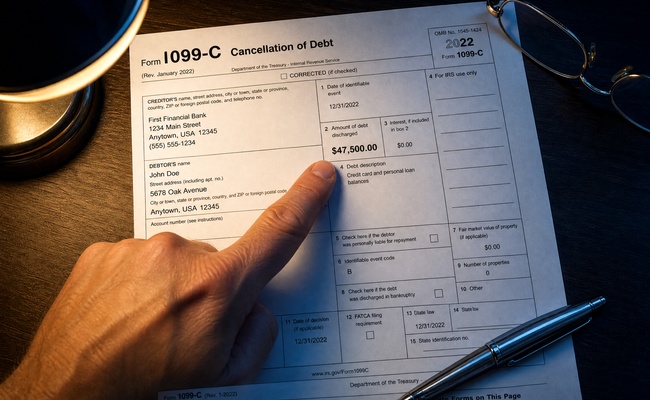
The logic from the IRS perspective is straightforward. If you borrowed $22,000 and only repaid $8,800, you effectively received $13,200 in value that you never paid for. The government views this as a financial gain similar to earning income, and they expect you to pay taxes on settled debt just as you would pay taxes on wages or investment returns. The creditor reports the canceled amount in Box 2 of Form 1099-C, and the amount may be included in gross income unless an exception or exclusion applies.
Many people are shocked to learn about taxes on settled debt because the settlement company or creditor rarely explains this consequence during negotiations. The focus is entirely on reducing the balance and stopping collection activity, with little mention of the tax bill that arrives months later. Understanding this reality before you settle is critical to making an informed decision about whether settlement is truly your best path forward.
Before accepting the tax consequences of settlement, explore whether a simpler approach might work for your situation. Our comprehensive guide to debt consolidation pros and cons explains how combining debts at a lower rate can eliminate high-interest charges without triggering any taxable income.
The timing of when a creditor files the 1099-C can also be confusing. Some creditors file it in the year the settlement is completed, while others wait until the account has been inactive for a defined period. The IRS requires creditors to file when an identifiable event occurs, such as a formal agreement to cancel the debt or the expiration of the statute of limitations. This means you could receive a 1099-C years after you thought the matter was resolved, creating unexpected taxes on settled debt long after you moved on financially.
How Much Will You Owe in Taxes on Settled Debt
The amount of taxes on settled debt depends entirely on your tax bracket and the size of the forgiven amount. The cancelled debt is added to your regular income for the year, and you pay your normal income tax rate on that additional amount. There is no special reduced rate for cancelled debt income, and the forgiven amount could potentially push you into a higher bracket if the cancellation is large enough relative to your regular earnings.
For example, if you settled $30,000 in debt for $12,000 and you are in the 22 percent federal tax bracket, the $18,000 in forgiven debt would generate approximately $3,960 in additional federal taxes on settled debt. Add state income tax if applicable, and the total tax bill could reach $5,000 or more. While this is significantly less than the original $30,000 you owed, it is still a meaningful expense that must be planned for.

The timing of taxes on settled debt also matters. The 1099-C is issued for the tax year in which the cancellation occurs, meaning you need to have funds available to pay the additional tax when you file your return the following April. If you settle debt in December, you may only have four months to prepare for the tax impact. Planning ahead and setting aside money specifically for this purpose can prevent the taxes on settled debt from creating a new financial crisis.
The Insolvency Exception: How to Legally Avoid Taxes on Settled Debt
The most important thing to know about taxes on settled debt is that you may not owe tax on some or all of a canceled amount if you qualify for the insolvency exclusion. Under IRS rules outlined in Publication 4681, the exclusion is generally limited to the amount by which your liabilities exceeded the fair market value of your assets immediately before the cancellation, and other rules may apply.
Insolvency means that you owe more than you own. To calculate this, add up everything you owe including mortgages, car loans, credit cards, medical bills, student loans, and any other debts. Then add up everything you own including bank accounts, retirement funds, home equity, vehicles, and personal property. If your debts exceed your assets, you are insolvent, and you can exclude some or all of the taxes on settled debt from your income.

For example, if your total debts are $85,000 and your total assets are $60,000, you are insolvent by $25,000. If you receive a 1099-C for $13,200 in cancelled debt, you can exclude the entire $13,200 from your income because your insolvency amount exceeds the cancelled debt. You would owe zero taxes on settled debt in this scenario. You claim this exclusion by filing IRS Form 982 with your tax return.
The insolvency worksheet calculation can seem intimidating, but it is simpler than most people expect. Our step-by-step guide to the IRS insolvency worksheet walks you through every line, shows you exactly which assets and liabilities to include, and reveals the five critical mistakes that invalidate your exclusion.
Many people who settle debts qualify for the insolvency exception because the very financial distress that led them to settle also means their liabilities exceed their assets. If you are settling debt because you genuinely cannot afford to pay, there is a strong chance you are insolvent and will owe no taxes on settled debt whatsoever. This is why calculating your insolvency before settling is so important.
How to File Form 982 to Exclude Taxes on Settled Debt
If you qualify for the insolvency exception, you must file IRS Form 982, Reduction of Tax Attributes Due to Discharge of Indebtedness, with your tax return for the year the debt was cancelled. This form tells the IRS that you are excluding the cancelled debt from your income and provides the legal basis for doing so. Without filing Form 982, the IRS will assume you owe taxes on settled debt and may send you a notice demanding payment.

The form itself is relatively simple. You check the box indicating insolvency in Part I, enter the amount of cancelled debt you are excluding in Part II, and attach it to your regular tax return. However, you should keep detailed documentation of your insolvency calculation in case the IRS questions your exclusion. This includes a complete list of all assets and liabilities as of the date immediately before the cancellation occurred.
If you are uncomfortable filing Form 982 yourself, a tax professional can prepare it for you, typically for a modest fee. Given that the taxes on settled debt can amount to thousands of dollars, paying $100 to $300 for professional help with this form is a worthwhile investment. The key is to file it proactively with your return rather than waiting for the IRS to send a bill and then trying to dispute it after the fact.
Many tax professionals recommend filing Form 982 even if you are unsure whether you qualify, because the worst outcome is that the IRS reviews it and determines you owe taxes on settled debt, which is the same outcome as not filing the form at all.
Keep in mind that even if you successfully exclude the taxes on settled debt through insolvency, you may still need to reduce certain tax attributes like net operating loss carryovers or credit carryovers by the excluded amount. For most individuals with simple tax situations, this reduction has no practical impact. However, if you have significant tax attributes from business losses or other sources, consult a tax professional to understand how the exclusion affects your future tax position.
Other Exceptions That Eliminate Taxes on Settled Debt
Beyond insolvency, several other situations allow you to exclude cancelled debt from your taxable income. If the debt was discharged through a Title 11 bankruptcy proceeding, the entire cancelled amount is excluded from income regardless of your solvency status. This is one of the significant tax advantages of bankruptcy over private debt settlement. If you are weighing your options, understanding this distinction is essential because the taxes on settled debt through private negotiation can be substantial while bankruptcy discharge carries zero tax liability.
Qualified farm indebtedness and qualified real property business indebtedness also qualify for exclusion under specific circumstances. Additionally, if the cancelled debt would have been deductible had you actually paid it, such as certain business expenses, you may not owe taxes on settled debt for that amount. Student loan forgiveness under certain public service programs is also excluded from taxable income under current law.

It is worth noting that the insolvency and bankruptcy exceptions are by far the most commonly used by individuals dealing with consumer debt. If you are settling credit card debt, medical bills, or personal loans, the insolvency exception is almost certainly the one that applies to your situation. The other exceptions are more relevant to business owners and farmers dealing with commercial debt obligations.
One critical detail many people miss is that the insolvency calculation must be performed as of the date immediately before the cancellation, not at the end of the tax year. If you received a large inheritance or sold property after the debt was cancelled but before December 31, your insolvency status is still determined based on your financial position at the moment before the cancellation occurred. This distinction can make the difference between owing thousands in taxes on settled debt and owing nothing at all.
What Happens If You Ignore the 1099-C
Ignoring a 1099-C does not make taxes on settled debt disappear. The IRS receives a copy of every 1099-C that creditors file, and their automated matching system will flag your return if the reported income does not appear. Within 12 to 18 months, you will likely receive a CP2000 notice from the IRS proposing additional tax, penalties, and interest on the unreported cancelled debt income.
If you qualify for the insolvency exception but fail to file Form 982, the IRS will still send you a bill. You can respond to the notice by providing your insolvency documentation and filing an amended return with Form 982 attached, but this process takes months to resolve and creates unnecessary stress. Filing correctly the first time is always the better approach when dealing with taxes on settled debt.

Some people receive 1099-C forms for debts they believe were already paid, debts that are beyond the statute of limitations, or debts they do not recognize. If you receive an incorrect 1099-C, you should dispute it directly with the creditor who issued it and request a corrected form. You are not required to pay taxes on settled debt that was reported in error, but you must take action to correct the record rather than simply ignoring the form.
It is also important to understand that receiving a 1099-C does not restart the statute of limitations on the underlying debt or create a new obligation to pay the original creditor. The form is purely a tax reporting document. Some unscrupulous collectors attempt to use the 1099-C as leverage to collect on old debts, but the Federal Trade Commission warns that this tactic may violate consumer protection laws. The taxes on settled debt are owed to the IRS, not to the original creditor, and only if you do not qualify for an exclusion.
Planning Ahead: Factoring Taxes on Settled Debt Into Your Settlement Strategy
The smartest approach to debt settlement includes calculating the potential taxes on settled debt before you agree to any settlement offer. Too many people celebrate the reduced balance without realizing they have traded one creditor for another, namely the IRS. If you know you are insolvent, you can settle confidently knowing the tax bill will likely be zero. If you are not insolvent, you need to factor the tax cost into your total settlement expense to determine whether the deal truly saves you money compared to other options like a debt management plan that does not trigger any tax consequences.
If the potential tax bill makes settlement less attractive, you may want to compare it against the alternative. Our guide on credit counseling vs debt settlement explains why counseling avoids the 1099-C issue entirely while still reducing your monthly payments significantly.
When negotiating a debt settlement, always calculate your total cost as the settlement amount plus any taxes on settled debt you will owe. A settlement of 40 cents on the dollar sounds attractive, but if you owe 22 percent tax on the forgiven 60 percent, your true cost is closer to 53 cents on the dollar. This is still a significant savings compared to paying the full balance, but it is not as dramatic as the settlement company’s marketing materials suggest.

Understanding the relationship between debt settlement and your credit score alongside the tax implications gives you a complete picture of the true cost. The Consumer Financial Protection Bureau recommends getting independent advice before entering any settlement agreement, and understanding taxes on settled debt is a critical part of that evaluation. The Fair Debt Collection Practices Act also protects you from collectors who misrepresent the consequences of settlement, including tax implications.
Frequently Asked Questions
Do I always have to pay taxes on settled debt?
No. If you are insolvent at the time the debt is cancelled, meaning your total debts exceed your total assets, you can exclude the cancelled amount from your income by filing IRS Form 982. Many people who settle debts qualify for this exception because their financial distress is what led them to settle in the first place. The insolvency exception is the most common way people legally avoid taxes on settled debt without filing bankruptcy.
What is the deadline for receiving a 1099-C?
Creditors must send Form 1099-C by January 31 of the year following the cancellation. If you settled debt in 2026, you should receive the form by January 31, 2027. If you do not receive one but know debt was cancelled, you are still responsible for reporting it or claiming the insolvency exception on your return.
Can I negotiate with the IRS if I cannot afford taxes on settled debt?
Yes. The IRS offers installment agreements that let you pay the tax bill over time, typically up to 72 months. You can also submit an Offer in Compromise if you can demonstrate that paying the full amount would create financial hardship. However, filing Form 982 to claim insolvency is almost always the better first step.
Does bankruptcy avoid taxes on settled debt?
Yes. Debt discharged through a Title 11 bankruptcy proceeding is completely excluded from taxable income regardless of your solvency status. This is one of the key tax advantages of bankruptcy over private debt settlement and should be factored into your decision when comparing options.
What if the 1099-C amount is wrong?
Contact the creditor who issued the form and request a correction. If they refuse, you can still file your tax return with the correct amount and attach a statement explaining the discrepancy. Keep all settlement agreements and payment records as documentation in case the IRS questions your reported amount.
Here Are More Articles That Might Interest You
If you are considering settlement but want to understand all the consequences first, our guide explains exactly how bankruptcy compares to debt settlement including the tax advantages of each path.
Before settling any debt, protect yourself by sending a debt validation letter to confirm the balance is accurate and the collector has legal authority to negotiate.
Understanding the statute of limitations on debt by state can help you determine whether you even need to settle or whether the debt is already legally unenforceable.
If collectors are pressuring you to settle immediately, learn how to stop debt collectors from calling so you can make decisions without pressure.
A pay for delete letter can help you negotiate removal of the collection from your credit report as part of your settlement agreement.
If your debt has been charged off, understanding the difference between a charge-off and a collection helps you know who to negotiate with and what leverage you have.
Learn whether your financial situation makes you judgment proof before deciding to settle, since creditors cannot collect from you anyway if your income and assets are exempt.
If you are weighing whether to use retirement savings to fund a settlement, read our analysis of using your 401k to pay off debt and why the math rarely works in your favor.
Wondering what happens to your credit after settling? Our timeline explains exactly how long collections stay on your credit report and when the damage begins to fade.
If you are overwhelmed and unsure where to start, our debt triage guide helps you prioritize your most urgent obligations before making any settlement decisions.
Join Our Newsletter
From time to time, we’ll send you information and resources that we believe may be helpful to you.
Subscribe to The Debt Survival Guide Newsletter
Disclaimer: The Debt Survival Guide provides educational content only. We are not attorneys, tax professionals, or financial advisors. This information should not be considered legal, tax, housing, credit, or individualized financial advice. Circumstances, agreements, deadlines, laws, and available options vary by person, account, location, and situation. Please review your records and written terms and consult a qualified attorney, legal-aid organization, HUD-approved housing counselor, tax professional, credit counselor, or financial professional before making decisions about your specific situation.