Imelda unlocked the corner grocery at ten minutes to six, the way she had four mornings a week for nine years, and used the quiet before the first customer to move money. A bank account frozen after judgment requires a different first response than an ordinary overdraft. Rent was due Friday. She opened the banking app on the register stool, and the balance line where a number should have been said the account was restricted.
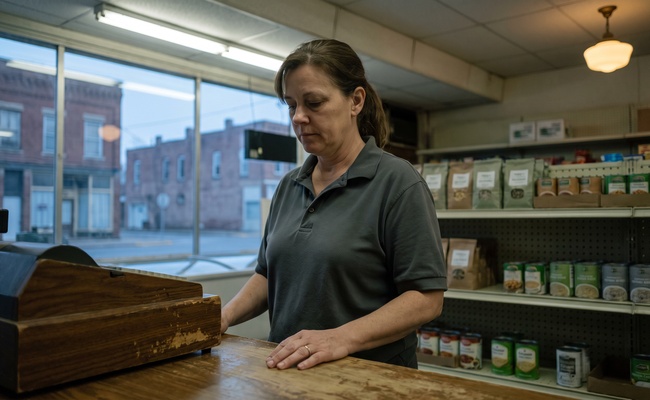
She called the bank at seven. A judgment she had lost two years earlier, on a store card she had stopped being able to pay during a stretch of reduced hours, had produced a court order overnight. Her paycheck had landed Thursday. Her sister’s care payment had landed Monday. All of it, the bank said, was on hold.
What nobody told Imelda in that call is the thing this article exists to say. A bank account frozen after judgment is not the same as a life frozen after judgment. Part of that balance was already hers to spend that morning. Her next paycheck did not have to land in the same place. The rent conversation with her landlord was going to go better with a copy of a court order than with an apology. Almost everything that mattered in Imelda’s first week with a bank account frozen after judgment required no lawyer and no waiting.
At The Debt Survival Guide, our team draws on over 45 years of CPA experience to help people evaluate difficult financial decisions with clarity and caution. We understand that a bank account frozen after judgment arrives with rent due, autopay scheduled, and groceries to buy this week rather than after a hearing. This guide explains what you can still reach today, how to stop failed payments from compounding the damage, how to redirect the money that has not arrived yet, and how to keep essentials covered while the freeze runs. Because state exemption laws, court procedures, and individual circumstances vary widely, educational information cannot replace individualized legal or financial advice.
Table of Contents
What Should You Do First If Your Bank Account Is Frozen After a Judgment?
Start by separating three different pots of money, because a bank account frozen after judgment almost never means every dollar is unreachable. Some of the balance may be automatically protected and spendable today. Some is frozen and waiting on a court. And money that has not been deposited yet is often not covered by that order at all.
Then move in this order. Confirm what is protected and withdraw it. Cancel every automatic payment aimed at the account before each failed attempt earns a fee. Redirect the next paycheck or benefit to an account the order does not touch. Tell the landlord and the utilities in writing, before any due date passes, that a court order is the cause.
Only after those four steps are handled does the paperwork fight deserve attention. Releasing the frozen money is a separate process with its own form, deadline, and hearing, and our guide on how to claim a bank levy exemption covers it start to finish.
The order matters more than it looks. Anyone who spends the first week on the court filing and the second week on the household pays returned-item fees on payments that were never going to clear. A bank account frozen after judgment creates two problems at once, and only one of those problems is legal. The household half is the half you control today, which is why a bank account frozen after judgment is best treated as a logistics emergency first and a legal matter second.
1. Find Out What Is Frozen and What Is Still Yours
When dealing with a bank account frozen after judgment, the first question is not how to fight the freeze. It is how much money you can touch today. With a bank account frozen after judgment, the answer is frequently more than zero, and almost nobody checks.
When the covered 31 CFR Part 212 review applies, a bank generally must review qualifying direct-deposited federal benefits and set aside the covered protected amount before freezing other funds; account and order details matter. The Office of the Comptroller of the Currency, which regulates national banks, states the consequence plainly: if money is automatically protected, it should not be frozen, and you should be able to withdraw it at any time.
That is a federal banking regulator saying protected money is spendable now, not after a hearing and not after a judge signs anything.
The protected amount is the lesser of two figures: the benefit payments deposited during a two-month lookback window, or the balance in the account when the bank performed its review. It is a ceiling rather than a guarantee, so someone receiving $1,600 a month who had $700 in the account at review has $700 protected, not $3,200.
Three facts about that review change what you do next with a bank account frozen after judgment.

Mixing money does not forfeit the protection. The regulation directs the bank to run its review without considering commingled funds from any source, a co-owner on the account, or the nature of the debt behind the order.
You do not have to ask. The protected amount is available without any filing, and you are not required to assert an exemption to reach it.
The covered review generally happens once on first service of that order. Deposits arriving after the review date may not be captured by that particular order, but a creditor may seek a later order; confirm the current procedure rather than treating this as a universal rule.
With a bank account frozen after judgment, call the bank and ask four specific questions. What is the protected amount you established. What is the frozen amount. On what date did you perform the account review. What garnishment fee has been charged and against which funds. Write the answers down with the name of the person who gave them, because a bank account frozen after judgment generates disputes that a contemporaneous note settles quickly. If no notice arrived, the regulator’s guidance is to ask the bank for a copy of the order it received.
If no qualifying federal benefits arrive in the account, the covered automatic protection may not apply, but that does not mean every frozen dollar is unreachable; state exemptions and court procedures may still matter. That is not the end of the matter. Many states protect a baseline amount in a bank account regardless of source, and the Consumer Financial Protection Bureau’s debt collection resources point toward legal aid organizations that handle these claims as routine work.
2. Stop the Automatic Payments Before They Multiply the Damage
This is the most expensive hour of neglect available to anyone with a bank account frozen after judgment, and it is invisible because the damage arrives later as a list of small charges.
Every payment scheduled against that account will attempt, fail, and cost you. The CFPB’s explanation of overdrafts lists automatic bill payments among the transactions that overdraw an account, alongside checks, debit purchases, and electronic withdrawals. A frozen balance produces that outcome on repeat, on a schedule set months ago and forgotten.
Many carry a second fee from the other side as well. The insurer, the gym, the phone company, and the utility each charge their own returned-payment fee, so a bank account frozen after judgment can generate two fees per attempt across a dozen payees.
Work through this in one sitting, in this order.
First, pull the last two statements and list every recurring debit by payee, amount, and date. Do not work from memory. The forgotten ones bite.
Second, cancel or reschedule each one at the source rather than at the bank. Turning off autopay inside the payee’s own account is more reliable than asking a bank to block a debit, and it leaves a record that you acted.
Third, handle the two categories that are dangerous to switch off. A car insurance lapse can cost far more than a returned-payment fee, and a missed minimum on an account still in good standing damages a credit report that a bank account frozen after judgment has not touched. Pay those two another way.
Fourth, ask the bank in writing to stop paying items into overdraft while the order is in force. It may decline. Ask anyway, because the request helps if you later dispute a fee.
Fifth, keep the list. It is how you restart the household when the freeze lifts, and it is the closest thing to a budget while a bank account frozen after judgment is running.
One narrower trap argues against a natural instinct. The regulator states a bank may charge a garnishment fee against funds that are not automatically protected, including deposits made up to five days after its review, so money added to a bank account frozen after judgment in that window can be consumed by the fee. Do not feed an account you cannot use.
3. Get Your Next Paycheck Somewhere You Can Reach It
The most valuable move available in the first week has nothing to do with the money already frozen. It is making sure the next deposit does not join it.
Because the account review happens once on service of the order, a deposit arriving afterward is not caught by that order. That does not make the account safe, since a creditor can serve a fresh order later, but it does mean a bank account frozen after judgment is now the worst available place for your income to land. Assume every future deposit is exposed and act accordingly.
Open an account at a different institution, not a second account at the same bank. Same-bank accounts share a customer record, and an order served on that relationship is far more likely to reach both. A separate institution is a separate service address.
Then, for lawful household continuity, redirect income only after checking the order and mind the timing, because payroll cutoffs are where this step fails. Employers and payroll systems vary; ask your payroll contact for the exact cutoff and which pay date the change first affects rather than relying on a several-days-to-two-weeks estimate.
If the money is a federal benefit, the Social Security Administration lets you update direct deposit by signing in to a my Social Security account, which it calls the fastest route, and notes that some benefit types require a phone call instead. There is also a route most people never hear about: your bank can send updated direct deposit information to Social Security on your behalf through an Automated Enrollment process, with no call or office visit, though not every bank offers it. Ask the new bank whether it does.
Two cautions come up constantly with a bank account frozen after judgment. Do not close the account, because closing it releases nothing, complicates the court’s release order, and cuts off statements you will need. Leave it open and empty. And do not try to outrun an order already served. The goal is lawful household continuity, not evading a valid judgment or concealing assets; any new account may still be subject to a later lawful order.
If wages are being garnished as well, that is a separate mechanism with its own protections and its own filing, and our guide on how to claim a garnishment exemption covers the paycheck side of the problem.
4. Keep the Essentials Covered While the Freeze Runs
A bank account frozen after judgment can hold for days or for weeks depending on your state and how fast the court moves. Rent, utilities, medication, and food do not observe that schedule.
With a bank account frozen after judgment, the instinct is to stay quiet and hope it resolves before anyone notices. That instinct is expensive. Landlords and utilities have formal hardship and payment-arrangement processes, and both respond far better to a documented court order than to a missed payment and an explanation.
Tell your landlord in writing while handling a bank account frozen after judgment, before the due date, that a court order has restricted the account, that you are working to resolve it, and what date you can realistically pay. Attach a copy of the order or the bank’s notice. A written record before default is a different conversation than an apology after it.
Contact each utility and ask what hardship protections and payment arrangements exist. Many have programs that are never volunteered and only offered when asked.

For medication, ask the pharmacist about a partial fill or a short emergency supply rather than skipping a dose. For food, use the pantries. Households working through a bank account frozen after judgment routinely qualify for help they assume is meant for someone else, and a court-ordered freeze is exactly the circumstance those programs exist for.
Two things to avoid while you bridge the gap. Do not solve a bank account frozen after judgment with a payday loan or a car title loan, because a short freeze becomes a long debt at triple-digit annual cost. And do not borrow against a retirement account in the first week of a problem that may resolve in the third.
Keep every receipt and every written exchange. If you later ask a court to release funds, a documented record of what a bank account frozen after judgment actually cost you is more persuasive than a description of it, and our guide on how to document debt collector violations covers the habits that make any later dispute winnable.
5. Protect the Money That Is Still Moving
Once income lands somewhere reachable, the job changes from triage to making sure a second bank account frozen after judgment does not repeat the first.
Keep protected income separate. Benefits deposited into their own account, by direct deposit, produce a cleaner record than a mixed account. Commingling does not forfeit the federal protection, but separation makes the tracing trivial if a court ever asks.
Move to direct deposit for any benefit still arriving by paper check. The automatic protection depends on an electronic marker only a direct deposit carries. A benefit check deposited by hand is still exempt money, but the review will not find it and you would have to prove it in court.

Keep a working cash cushion outside the banking relationship the judgment creditor knows about. Not a hiding place and not a scheme, just enough at hand that a future bank account frozen after judgment does not immediately become a missed rent payment.
Watch for a second order. A judgment stays enforceable for years in most states and can usually be renewed, so a bank account frozen after judgment can happen again on the same debt.
That is also the argument for resolving the judgment rather than only surviving each levy. A negotiated payment arrangement ends the cycle in a way that winning a single exemption claim does not, and our guide on how to negotiate debt after judgment covers that conversation.
Finally, if the judgment itself was entered without your knowledge, everything above treats a symptom. Attacking the judgment may accomplish more than any account strategy, and a bank account frozen after judgment that was never properly served is a different problem with a different remedy.
6. Decide What to Escalate and Where It Goes
Everything to this point keeps a household running during a bank account frozen after judgment. None of it releases the money, and this section points you at the right process rather than repeating it.
To release the funds from a bank account frozen after judgment, you file a claim of exemption with the court that issued the order, before a deadline your state sets. Our step-by-step guide on how to claim a bank levy exemption, linked above, covers the form, the evidence, the hearing, and how to recover money already turned over.
If a paycheck is being taken as well, the wage version is a different filing with a different calculation, covered in our guide on claiming a garnishment exemption.

If your income is entirely protected sources, the more useful question than how to handle a bank account frozen after judgment is whether a creditor can reach anything at all, and our explanation of being judgment proof covers that assessment.
Bring in help sooner in four situations: the frozen money is largely benefit income, the deadline in the notice is days away, the judgment was entered without your knowledge, or the amount at stake exceeds what you could afford to lose. Legal aid organizations handle these claims as ordinary work at no cost to qualifying households, and when the covered federal review applies, the bank’s notice may identify available assistance; procedures and remedies still depend on the account, order, and jurisdiction.
One escalation is separate from the money. If a collector threatened a levy it had no legal right to obtain, or misrepresented what a court had authorized, that conduct may violate the Fair Debt Collection Practices Act and is worth documenting on its own track rather than folding it into the exemption claim.
Mistakes That Make a Frozen Account Worse
Many immediate problems with a bank account frozen after judgment are household decisions made under pressure, but legal and jurisdiction-specific issues still require attention. They are ordinary household decisions made under pressure, and the Federal Trade Commission’s debt collection answers cover the underlying rights in plainer language than any court form will.
Leaving autopay running is first and most expensive, because a bank account frozen after judgment turns every scheduled payment into two fees and the total compounds weekly while attention sits on the court.
Assuming the whole balance is unreachable stops people from withdrawing protected money that a federal regulator says should never have been frozen. Ask what the protected amount is before treating a bank account frozen after judgment as empty.
Letting the next paycheck land in the frozen account wastes the one clear advantage the timing rules provide, since the account review happens once and later deposits are not caught by that order.

Opening the replacement account at the same bank defeats the purpose, because one institution serving one customer relationship is far more likely to restrict both accounts than two separate institutions are.
Closing a bank account frozen after judgment releases nothing, complicates a later court order, and costs you the statements you will need as evidence.
Staying silent with a landlord or utility converts a documented court problem into an undocumented payment failure, the version that damages you longest.
Solving a bank account frozen after judgment with a payday or title loan turns weeks of inconvenience into months of interest, and the debt outlives the freeze by a wide margin.
Treating the household and the court filing as one task is the quiet mistake underneath all the others. The two run on different clocks, and only one has a deadline printed on a piece of paper.
Frequently Asked Questions
Can I take any money out if my bank account is frozen after a judgment? Often yes. If federal benefits arrive by direct deposit, the bank must set aside a protected amount before freezing anything, and the Office of the Comptroller of the Currency states that automatically protected money should not be frozen and should be available to withdraw at any time. Call and ask what protected amount the bank established.
How long does a bank account frozen after judgment stay frozen? It depends on your state’s procedure and how quickly the court acts, so any single number quoted online is unreliable. What matters more is your own deadline to object, which is short and stated in the notice. Treat the timeline as urgent regardless of how long the hold lasts.
Will my next paycheck be frozen too? Not by the same order. The review happens once on service, so later deposits are not captured by it, though a creditor can serve a new order. Route future income to a different institution.
Should I close the account? No. Closing a bank account frozen after judgment does not release the money, it can complicate the release order a court later issues, and it cuts off access to statements you will need as evidence. Leave it open, stop feeding it, and move income elsewhere.
Can the bank charge me a fee on top of all this? Yes, within limits. A bank may charge a garnishment fee against funds that are not automatically protected, consistent with your account agreement, and fees and post-review deposit treatment depend on the covered rule, the review date, and the account agreement. It may not charge a fee against the automatically protected amount when the applicable rule prohibits it.
Do I need a lawyer to handle a bank account frozen after judgment? Many immediate household steps may be possible without a lawyer, but court filings, exemptions, and state-specific issues may require legal help. For the court filing that releases the money, legal aid organizations handle those claims routinely at no cost to qualifying households, and calling one early is worth it when benefit income is frozen or a deadline is close.
Here Are More Articles That Might Interest You
If you want to understand how a levy reaches an account in the first place, our guide to whether debt collectors can take money from your bank account covers the mechanics and the warning signs.
If a paycheck is being taken as well, our guide on how to stop wage garnishment for credit card debt explains the options at that stage.
Anyone worried a spouse’s income is exposed should read our answer to whether a collector can garnish a spouse’s wages.
Readers whose income is entirely Social Security or veterans benefits should read what a collector can do with your Social Security or VA benefits before assuming the worst.
If the judgment came from a case you never answered, our guide to a default judgment for debt explains what it takes to reopen one.
If court papers have arrived but no judgment exists yet, our guide on how to answer a summons for debt collection covers the response that prevents this stage entirely.
For readers questioning whether the collector could lawfully sue at all, our look at the statute of limitations on debt explains how those deadlines work.
If a short-term loan is starting to look like the answer, read our warning on the payday loan debt trap first.
Anyone whose total debt is beyond what any single fix can solve may find our overview for people drowning in debt a useful way to compare remaining options by cost.
Join Our Newsletter
From time to time, we’ll send you information and resources that we believe may be helpful to you.
Subscribe to The Debt Survival Guide Newsletter
Disclaimer: The Debt Survival Guide provides educational content only. We are not attorneys, tax professionals, or financial advisors. This information should not be considered legal, tax, housing, credit, or individualized financial advice. Circumstances, agreements, deadlines, laws, and available options vary by person, account, location, and situation. Please review your records and written terms and consult a qualified attorney, legal-aid organization, HUD-approved housing counselor, tax professional, credit counselor, or financial professional before making decisions about your specific situation.