When Robert received the phone call three weeks after his wife’s funeral, the voice on the other end demanded he pay $47,000 in credit card debt that belonged solely to her. At 68 years old, still grieving and barely able to manage daily tasks, Robert had no idea whether he was legally responsible for debt after death or whether the caller was exploiting his vulnerability. The confusion and fear he felt in that moment is something thousands of surviving spouses experience every year when collectors exploit grief to collect debt after death that may not even be owed.

At The Debt Survival Guide, our team draws on over this guide provides general educational information to help you understand the complex intersection of debt, estate law, and survivor liability. We have analyzed examples of estate-debt situations where grieving families were pressured to pay debts they did not legally owe, and we have seen how understanding your rights can protect you from financial exploitation during an already devastating time. Our goal is to give you clear, accurate information so you can make informed decisions about debt after death without being manipulated by aggressive collectors. Whether you are currently facing this situation or planning ahead, understanding how debt after death works is essential financial knowledge for every married person.
Table of Contents
What Happens to Debt After Death
When someone passes away, their debts do not automatically transfer to their surviving family members. This is one of the most important facts about debt after death that every surviving spouse needs to understand. The deceased person’s estate, which includes all assets they owned at the time of death, becomes responsible for paying outstanding debts through the probate process. If the estate has sufficient assets, creditors are paid from those assets before any remaining property is distributed to heirs.
The general rule in American law is straightforward: you are only responsible for debts you personally agreed to pay. Unless you co-signed a loan, held a joint account, or live in a community property state, your deceased spouse’s individual debts are not your problem. Debt after death belongs to the estate, not to the surviving family. This principle protects millions of surviving spouses from inheriting financial obligations they never agreed to take on. Despite this clear legal framework, confusion about debt after death remains widespread because collectors deliberately exploit that confusion.
If the estate does not have enough assets to cover all outstanding debts, the remaining balances are generally written off by creditors. The debts simply go unpaid because there is nothing left to collect from. This is fundamentally different from what many aggressive collectors suggest when they contact surviving family members and imply that the debt has somehow become their personal obligation. In most cases, if you did not co-sign the debt or live in a community property state, estate liability depends on creditor claims, probate administration, secured claims, and state law with the person who owed it.
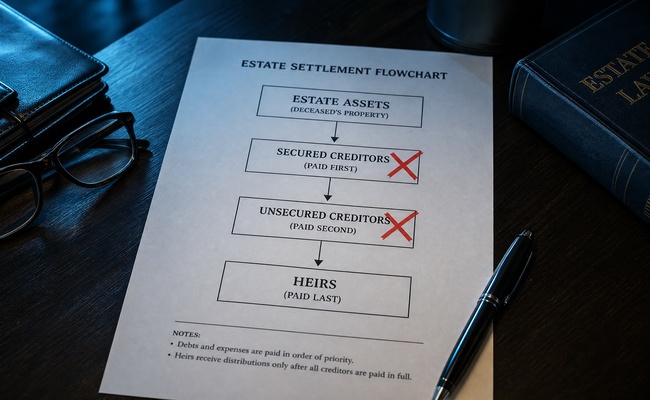
The probate court oversees this process and establishes a priority order for paying creditors. Secured debts like mortgages and car loans are typically paid first because they are attached to specific property. Unsecured debts like credit cards and medical bills are handled according to applicable creditor priority and estate-administration rules, and only if sufficient estate assets remain. Understanding this hierarchy helps you recognize that unsecured debt after death is the most likely category to go unpaid when an estate has limited resources.
Many people are surprised to learn that credit card companies and medical providers expect to lose money on debt after death situations. These creditors build default rates into their business models, knowing that a percentage of borrowers will pass away with insufficient estate assets. This is why collectors sometimes pressure surviving family members into voluntary payments, because they know the estate process may yield nothing. Recognizing this dynamic helps you understand that their urgency about debt after death is about their bottom line, not your legal obligation.
When a Surviving Spouse Is Responsible for Debt After Death
There are specific circumstances where a surviving spouse can be held legally responsible for a deceased partner’s debt. The most common situation is when you co-signed the original loan or credit agreement. If both names appear on the account as joint account holders, you are equally responsible for the full balance regardless of who actually made the purchases or charges. This applies to joint credit cards, joint personal loans, and any debt where both spouses signed the original agreement. In these joint account situations, debt after death does transfer to the surviving co-signer because the obligation was always shared from the beginning.

Being an authorized user on a credit card is different from being a joint account holder. If you were merely an authorized user on your spouse’s credit card, you are generally not responsible for the balance after their death. The distinction matters enormously because collectors often blur this line, hoping you will not know the difference. Check the original account agreement to determine whether you signed as a co-applicant or were simply added as an authorized user later. If you are dealing with debt collector harassment, knowing this distinction is your first line of defense.
Medical debt presents a unique situation in some states. Certain states have what are called “necessaries” or “doctrine of necessities” statutes that can make a surviving spouse responsible for the deceased partner’s medical expenses, even if the surviving spouse never signed anything. These laws vary significantly by state and are not universally enforced, but they represent a legitimate exception to the general rule that you are not responsible for your spouse’s individual debts.
Understanding the difference between individual debt and shared debt is essential when navigating debt after death. Individual debt means only one person signed the credit agreement, and that debt belongs solely to their estate. Shared debt means both parties agreed to repay, making both equally liable. If you are uncertain about the nature of a specific account, request the original signed agreement from the creditor. They are required to provide this documentation upon request, and it will clearly show whether one or both spouses signed. This documentation is your strongest defense against improper debt after death collection attempts.
Community Property States and Debt After Death
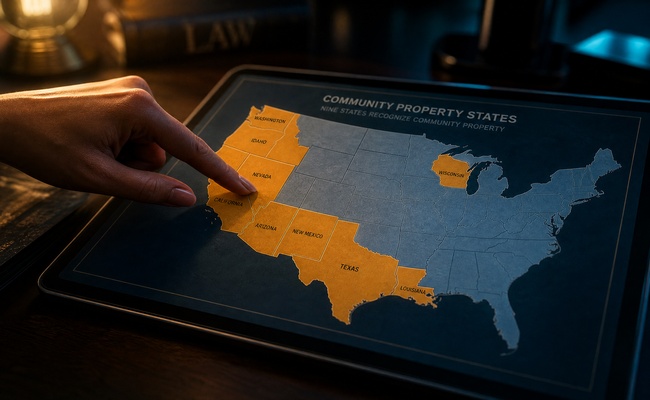
If you live in a community property state, the rules about debt after death are significantly different. In community property states, most debts incurred during the marriage are considered joint obligations of both spouses, regardless of whose name is on the account. This means a surviving spouse in a community property state may be responsible for debts their deceased partner accumulated during the marriage, even if they never signed anything or knew about the debt.
The nine community property states are Arizona, California, Idaho, Louisiana, Nevada, New Mexico, Texas, Washington, and Wisconsin. Alaska allows couples to opt into community property through a written agreement. If you live in any other state, you are in a common law property state where debts generally belong only to the person who incurred them unless there is a co-signer.
Even in community property states, there are important exceptions. Debts incurred before the marriage typically remain the sole responsibility of the person who took them on. Debts that can be proven to have been incurred for non-marital purposes, such as gambling debts hidden from the other spouse, may also be excluded. Additionally, some community property states have specific protections for surviving spouses that limit liability for certain types of debt after death. Consulting with a probate attorney in your state is essential if you live in a community property jurisdiction and are facing creditor claims.
If you live in a common law state, which includes the vast majority of states, the rules about debt after death are much more favorable to surviving spouses. In common law states, each spouse owns their individual debts separately. Your deceased spouse’s credit card that only had their name on it remains their individual obligation, payable only from their estate. Your personal assets, income, and separate accounts are subject to applicable ownership, estate, exemption, and state-law rules to their creditors unless you voluntarily agree to pay. For most Americans, common law state protections mean that debt after death is handled entirely through the estate without any personal liability for the surviving spouse.
How the Estate Settlement Process Works
When someone dies, their estate goes through probate, which is the legal process of settling their financial affairs. The executor or personal representative named in the will, or appointed by the court if there is no will, is responsible for identifying all assets and debts, notifying creditors, and distributing remaining assets according to the will or state law. This process typically takes six months to over a year depending on the complexity of the estate.
Creditors have a limited window to file claims against the estate. Most states require the executor to publish a notice to creditors, which starts a clock that typically runs 30 to 90 days. If a creditor fails to file a claim within this period, they may lose their right to collect from the estate entirely. This deadline is important because it means debt after death has a built-in expiration mechanism that protects heirs from indefinite creditor claims. Once the claims period expires, creditors who failed to file are permanently barred from pursuing the debt through any channel. This time-limited nature of debt after death claims is one of the strongest protections available to surviving family members.

The executor pays valid creditor claims from estate assets in the priority order established by state law. If the estate is insolvent, meaning debts exceed assets, the executor distributes available funds according to the statutory priority and the remaining debts are discharged. Heirs receive nothing from an insolvent estate, but they also do not inherit the unpaid debts. If you recently lost a spouse and are overwhelmed by the financial situation, understanding what to do first when drowning in debt can help you prioritize your immediate steps.
Assets That Are Protected From Creditors After Death
Not all assets belonging to the deceased are available to pay creditors. Certain assets pass directly to beneficiaries outside of probate and are generally protected from creditor claims against the estate. Life insurance proceeds paid to a named beneficiary go directly to that person and cannot be seized by the deceased’s creditors. The same is true for retirement accounts like 401k plans and IRAs that have designated beneficiaries.
Joint bank accounts with rights of survivorship pass directly to the surviving account holder at the moment of death. These funds are generally not part of the probate estate and are not available to pay the deceased’s individual creditors in most states. Similarly, property held as joint tenants with rights of survivorship or as tenants by the entirety passes directly to the surviving owner without going through probate.
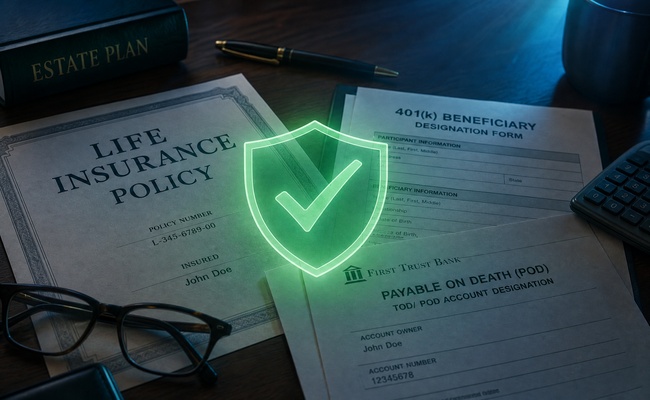
Transfer-on-death designations on investment accounts and payable-on-death designations on bank accounts also bypass probate and pass directly to named beneficiaries. If your spouse properly designated you as the beneficiary on these accounts, the funds belong to you immediately upon their death and are not subject to claims from their creditors. This is why proper estate planning, including beneficiary designations on all accounts, is one of the most effective ways to protect a surviving spouse from debt after death. Understanding whether you are judgment proof can provide additional peace of mind if collectors pursue you personally.
Illegal Collector Tactics After a Death
Debt collectors frequently contact surviving family members after a death, and many use tactics that range from misleading to outright illegal. The Fair Debt Collection Practices Act prohibits collectors from misrepresenting the amount or legal status of a debt, and this protection extends to communications with surviving family members. A collector who tells you that you are personally responsible for your deceased spouse’s individual debt after death when you are not is violating federal law.
Collectors are permitted to contact surviving spouses and executors to discuss the debt, but they cannot demand payment from someone who does not legally owe the money. They can inform you that the debt exists and ask about the estate, but they cannot threaten legal action against you personally for a debt that belongs only to the estate. If a collector implies that your credit score will be damaged or that you will be sued for your spouse’s individual debt, and you are not legally responsible, they are using illegal scare tactics.

Document every communication from collectors after a death. Write down the date, time, caller’s name, company name, and exactly what was said. If they make false claims about your liability, this documentation becomes evidence of an FDCPA violation that you can report to the Consumer Financial Protection Bureau or use in a lawsuit. You have the right to send a written request telling the collector to stop contacting you, and they must comply. If you need guidance on formal communication with collectors, our guide on debt validation letters provides a template you can adapt for this situation.
Steps to Protect Yourself as a Surviving Spouse
The first step after losing a spouse is to avoid making any payments on debts you are not sure you owe. Making a payment can sometimes be interpreted as accepting responsibility for the debt, even if you were not originally liable. Do not let grief or pressure from collectors push you into paying something that may not be your legal obligation. Take time to understand your actual liability before writing any checks. The rules surrounding debt after death are designed to protect you, but only if you exercise those protections rather than paying out of fear or guilt.
Request a copy of your deceased spouse’s credit report from all three major bureaus. This gives you a complete picture of all outstanding debts and helps you identify which accounts were individual and which were joint. You can request this report by providing a death certificate and proof of your relationship. Knowing exactly what debts exist prevents collectors from fabricating or inflating claims against the estate. This step is critical because some collectors attempt to collect on debts that have already been paid, discharged, or that never belonged to the deceased in the first place.
Create a written record of every debt, noting whether it was individual or joint, the current balance, and the creditor’s contact information. This master list becomes your roadmap for handling debt after death systematically rather than reacting to each collector call in isolation. Having this organized information also helps your probate attorney work more efficiently if you decide to hire one, potentially saving you money on legal fees. A clear understanding of all debt after death obligations allows you to respond to collectors from a position of knowledge rather than vulnerability.

As you rebuild your financial life after a spouse’s passing, understanding how your remaining accounts affect your score is essential. Our guide on credit utilization and your score explains how closed joint accounts and reduced credit limits change your utilization ratio and what steps protect your credit during this transition.
Consult with a probate attorney, especially if you live in a community property state or if the estate is complex. Many attorneys offer free initial consultations for estate matters, and the cost of professional guidance is minimal compared to the potential cost of paying debts you do not legally owe. An attorney can review your specific situation, identify which debts are your responsibility, and help you respond appropriately to creditor claims. The Federal Trade Commission provides additional resources for consumers dealing with debt-related issues after a family member’s death.
If you determine that certain debts are legitimately your responsibility, explore your options before agreeing to pay the full amount. You may be able to negotiate a reduced settlement, set up a manageable payment plan, or qualify for hardship programs. If the total debt exceeds your ability to pay, understanding options like debt settlement and its impact on credit can help you make an informed decision about the best path forward.
If you determine that certain debts are legitimately yours, creating a structured plan is essential. Our guide on building a realistic debt repayment budget helps you allocate your newly single income effectively while addressing inherited obligations without creating additional financial stress.
Frequently Asked Questions
Does debt after death transfer to children?
No. Children are never personally responsible for a deceased parent’s debt unless they co-signed the specific obligation. Collectors may contact adult children to discuss the estate, but they cannot demand personal payment. The estate pays what it can, and any remaining debt is discharged. Children do not inherit unpaid balances regardless of how much the deceased owed.
Can collectors take my inheritance to pay my spouse’s debt?
If you inherit assets through the probate estate, creditors may have a claim on those assets before distribution. However, assets that pass directly to you outside of probate, such as life insurance, retirement accounts with beneficiary designations, and jointly held property, are generally protected from the deceased’s creditors.
What if I already paid a debt after death that I did not owe?
If you paid a deceased spouse’s debt that was not your legal responsibility, you may be able to recover the payment. Consult with an attorney about your options, which may include demanding a refund from the collector or filing a complaint for unfair collection practices. Acting quickly improves your chances of recovery.
How long can creditors pursue debt after death?
Creditors must file claims against the estate within the notice period established during probate, typically 30 to 90 days after publication. After this window closes, most creditor claims are barred. However, secured debts attached to property like mortgages remain enforceable against the collateral regardless of probate timelines. The statute of limitations on debt after death varies by state but the probate claims deadline is the primary cutoff for most unsecured creditors.
Should I notify creditors of my spouse’s death?
The executor is responsible for notifying creditors during probate. As a surviving spouse, you are not required to personally contact every creditor. However, notifying joint account creditors promptly can prevent additional charges from accumulating and protect your own credit score on shared accounts.
Is debt after death different for married versus unmarried partners?
Yes. Unmarried partners have liability that depends on the person.s legal obligation, account, and applicable law for each other’s debts unless they co-signed specific accounts. The community property rules and necessaries doctrines that can create spousal liability do not apply to unmarried couples. If you were not legally married, debt after death belonging to your partner is exclusively the responsibility of their estate.
Here Are More Articles That Might Interest You
If you are dealing with aggressive collectors after a loss, learn how to stop debt collectors from calling and reclaim your peace.
Understanding the statute of limitations on debt by state can reveal whether old debts are even legally enforceable.
If collectors threaten to access bank accounts, know your rights about whether debt collectors can take money from your bank account.
Explore whether credit card debt forgiveness is real or a scam before pursuing settlement options.
Learn how long collections stay on your credit report and what that means for your financial future.
If you received a 1099-C for cancelled debt, our guide on paying taxes on settled debt explains your obligations.
If the estate settles debts for less than owed during probate, the tax implications can affect beneficiaries. Understanding how taxes on settled debt work helps executors plan for potential 1099-C forms that may arrive after the settlement process is complete.
Discover what really happens when you ignore a debt collector and whether silence is a viable strategy.
Find out whether debt collectors can legally call your family or employer about outstanding debts.
If wage garnishment becomes a concern, learn how to stop wage garnishment for credit card debt before it starts.
Our guide on credit card hardship programs reveals options your bank may not voluntarily offer.
Join Our Newsletter
From time to time, we’ll send you information and resources that we believe may be helpful to you.
Subscribe to The Debt Survival Guide Newsletter
Disclaimer: The Debt Survival Guide provides educational content only. We are not attorneys, tax professionals, or financial advisors. This information should not be considered legal, tax, housing, credit, or individualized financial advice. Circumstances, agreements, deadlines, laws, and available options vary by person, account, location, and situation. Please review your records and written terms and consult a qualified attorney, legal-aid organization, HUD-approved housing counselor, tax professional, credit counselor, or financial professional before making decisions about your specific situation.